Best Launcher Apps for Android (2026)
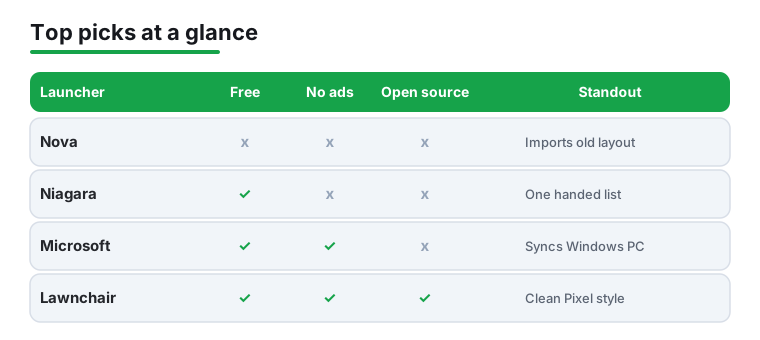
- Best overall: Nova Launcher, though it now leans on a subscription, so many pick Lawnchair instead.
- Best minimalist: Niagara Launcher (or Olauncher for radical, text only screens).
- Best free, no ads: Microsoft Launcher if you live in Outlook and Windows.
- Switching a launcher does not touch your apps or data, it only changes the front door.
Your launcher is the first thing you touch every time you pick up your phone, so a good one quietly saves you taps all day. We set each of these as our daily home screen for at least a week, rebuilt the app drawer, and lived with the results. The picks below run from dead simple minimalist screens to launchers you can tinker with for hours. For more ways to make your device yours, browse our wider Personalization guides, or pair a fresh home screen with one of the best Android keyboards.
1. Nova Launcher
Nova is still the launcher we reach for first when leaving a stock home screen. It lets you change icon size, grid spacing, gestures, and folder styles without ever feeling fragile, and it imports your old layout in minutes. One thing to know in 2026: Nova changed hands to a new owner, the old one time Prime purchase is moving to a yearly Nova subscription, and some builds now show ads. The core is still excellent and swiping up for the app drawer feels instant, but it is no longer the no strings pick it once was.
2. Niagara Launcher
Niagara throws out the grid and lists your favorite apps down one side, sorted so your thumb reaches everything one handed. In our testing the alphabetical scroll bar made finding a buried app genuinely quick. It is free with an optional Pro subscription, and surfacing notifications inline next to each app is the detail that wins people over. Our minimalist home screen guide covers the setup.
3. Microsoft Launcher
Microsoft Launcher is the easy pick if your life runs on Outlook, To Do, and a Windows PC. Your calendar, tasks, and recent files sit in a left hand feed, and Continue on PC hands a webpage straight to your desktop. It is completely free with no ads, and we found the daily Bing wallpaper a small but pleasant reason to glance at the home screen.
4. Lawnchair
Lawnchair gives you a clean Pixel style launcher with the customization Google leaves out, all open source and free with no catch. It suits people who love the stock look but want bigger icons, custom icon packs, and tweakable gestures. The latest builds feel stable for daily use, and we liked how it stays true to Material You theming while handing back control Google keeps locked away.
5. Smart Launcher
Smart Launcher sorts your apps into automatic category folders the moment you install it, so games, media, and tools land where you expect with no setup. It suits people who hate organizing and just want order. It is free with a Pro tier for extra grids, and the adaptive engine that recolors icons and wallpaper to match each other is a genuinely slick touch.
6. Action Launcher
Action Launcher packs some of the cleverest ideas here, like Shutters that flip an icon to reveal its widget, and Covers that turn a folder into one tappable icon. It suits power users who want shortcuts hiding in plain sight, and it rides closely on stock visuals. The free version is capable, with a Plus upgrade for the headline tricks, and the quickbar search saved us real time.
7. Hyperion Launcher
Hyperion is the launcher for people who treat their home screen like a canvas. It leans into Material design with deep color controls, custom drawer styles, and a settings layout that makes experimenting painless. The core is free, with a supporter unlock for the full toolkit, and in our testing its dock and drawer customizations gave the cleanest results of any themer we tried.
8. Olauncher
Olauncher is radical minimalism in app form, just a short list of text app names on a plain background, no icons, no widgets, no noise. It suits anyone trying to use their phone less and break the doomscroll habit. It is completely free, open source, and ad free. We found the stripped back screen genuinely lowered the urge to tap, and hiding apps from the list helps screen time.
9. POCO Launcher
POCO Launcher is a lightweight, fast home screen that pairs an auto categorized app drawer with color sorting, and it runs well on modest hardware. It is aimed at Xiaomi, Redmi, and POCO owners, where it installs cleanly and runs well, rather than being a general pick for every phone. The drawer that groups apps by color sounds gimmicky but helps you spot the one you half remember by its icon shade.
10. Kvaesitso
Kvaesitso is a search first, open source launcher where one bar finds apps, contacts, files, settings, and even does quick math without leaving the home screen. It suits keyboard lovers who navigate by typing rather than scrolling. It is completely free with no ads or tracking, and we were impressed how its widget style results surfaced exactly what we needed in one go.
11. AIO Launcher
AIO Launcher replaces icons with a dense text dashboard showing notifications, battery, RAM, news, and feeds on one scrollable screen. It suits information junkies who want data at a glance over a pretty grid. It is free with a Pro tier for extra widgets, and we found the live system stats and notification list oddly satisfying for keeping tabs on a busy phone.
12. Square Home
Square Home brings a Windows Phone style tile layout to Android, with live tiles you resize and color into a bold, readable grid. It suits anyone who misses that look or wants large, easy to hit targets, which makes it kind to less technical users too. It is free with a paid key for extra features, and the chunky tiles were the most accessible we tried for older relatives.
How to choose your Android launcher
A launcher is the app that draws your home screen and app drawer. It controls how your icons, folders, gestures, and widgets look and behave. Swapping it does not touch your data or your installed apps. It only changes the front door to them. Because the launcher sits in front of everything else you do, the goal is to pick one that feels natural in your hand and then largely gets out of the way. Most people do not need to think about their launcher much after the first day, which is exactly the point. A good one settles into the background and just works.
Before you compare features, it helps to know what you are actually unhappy with. If your icons are too small, your folders are a mess, or you wish a swipe could open the camera, those are launcher problems. If your phone is slow, your battery dies by lunch, or an app keeps crashing, a new launcher will not fix any of that. Being honest about the real complaint saves you from installing something that changes the look but not the experience.
Customization that actually matters
Most people switch launchers for control over the everyday details. The features worth checking, in rough order of how often they come up, are these:
- Icons and themes. Look for adjustable icon size, support for third party icon packs, and a way to match colors to your wallpaper. This is what makes a home screen feel like yours rather than a default. If you want every icon to share one shape and palette, check that the launcher supports adaptive or themed icons before you commit.
- Grid and layout. A flexible grid lets you fit more (or fewer) icons per row, resize widgets, and leave breathing room. A tighter grid suits people who want everything in reach, while a looser one feels calmer. Minimalist launchers drop the grid entirely in favor of a short text list, which is a different way of working rather than simply fewer icons.
- Gestures. Swipe up for the camera, double tap to lock, swipe down for notifications, pinch to open settings. Good gesture support removes taps from your day, which is the whole point. The more of your common actions you can map to a swipe, the less your home screen needs to be cluttered with shortcuts at all.
- The app drawer. Some launchers sort apps alphabetically, some into automatic category folders, some behind a search bar you type into. Pick the model that matches how you actually find things. If you reach for the same six apps all day, a search first or favorites first drawer beats endless scrolling. If you graze across dozens of apps, automatic folders keep them tidy.
Speed and performance
Performance is the part people skip. A launcher only does real work while you are on the home screen, so most modern phones never notice it. Older or budget phones with 3 to 4GB of RAM are a different story. A heavy launcher loaded with live wallpapers, animated transitions, and constant feed widgets can make the whole phone feel sluggish, because every background process eats memory. If your phone is a few years old, pick a light option like Lawnchair or Olauncher and turn off live wallpapers first. Keeping 15 to 20 percent of your storage free helps too, and a tired battery can quietly throttle the processor.
A note on privacy and permissions
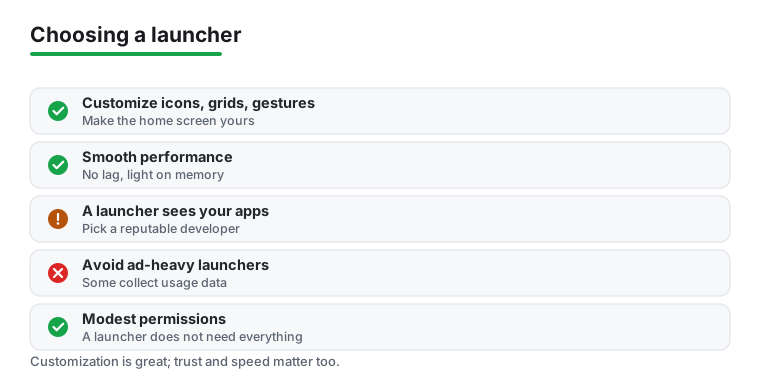
This is the part that deserves real attention. A launcher replaces your home screen, which means it can see which apps you have installed and which ones you open. That is normal and necessary for it to do its job, but it also makes the choice of developer matter more than with most apps. A launcher quietly watches a lot of how you use your phone.
So choose one from a reputable developer with a clear privacy policy. Some free launchers pay for themselves by showing ads or by collecting usage data, and that is the trade you are accepting in exchange for the price. Neither is automatically wrong, but you should know which one you picked. If avoiding tracking matters to you, open source launchers let anyone inspect what the code actually does, and several of the picks here are free of both ads and tracking.
The practical test is permissions. A launcher needs very little to function. Be cautious if one asks for access that has nothing to do with drawing a home screen, such as your contacts, your location, your microphone, or your call logs, with no obvious reason. You can review and revoke these under Settings, Apps, the launcher, Permissions at any time, and a trustworthy launcher will keep working fine without the ones it does not genuinely need. In short, look for smooth performance, sensible customization, and an app that does not request more permissions than a launcher needs.
Set it as your default and back up first
Install a launcher from the Play Store, then press the home button. Android asks which home app to use, and choosing Always sets it. To change it later, open Settings, Apps, Default apps, Home app and pick one. Your hand built layout does not move between launchers by itself, so before you swap, take a quick screenshot of each home screen to rebuild from memory. Nova and Lawnchair both offer a backup file you can save to Google Drive, which restores your whole layout, widgets, and folders in one step if you change your mind.
Check what stock already does
Before installing anything, see what you already have. The Pixel launcher does themed Material You icons and a hidden grid size setting. Samsung One UI lets you long press the home screen, open Home screen settings, change the grid, resize icons, and pull a color palette from your wallpaper onto every icon. Many people want a feature their stock launcher already offers. A third party launcher earns its place when you want gestures, real icon packs, or a calmer screen your phone refuses to give you. If you only wanted bigger icons, stock probably already covers you.
Frequently asked questions
What is the best launcher app for Android?
For most people Nova Launcher is still a strong first choice. It is fast, deeply customizable, and imports your existing layout so nothing feels lost, though since its 2026 ownership change it now leans on a subscription, so some people prefer Lawnchair instead. If you want a calmer, simpler home screen, try Niagara Launcher, and if you live in Microsoft apps, Microsoft Launcher ties everything together neatly.
Are launcher apps safe to install on Android?
Reputable launchers from the Play Store are safe, though a launcher can see which apps you open, so stick to well known names with clear privacy policies. Open source options like Lawnchair, Olauncher, and Kvaesitso are good picks if you want to know exactly what the app does and avoid ads or tracking.
Will a custom launcher drain my battery or slow my phone?
In our testing the impact was minimal on modern hardware. A launcher only runs when you are on the home screen, so lightweight options like POCO Launcher or Olauncher barely register. Heavy live wallpapers and constant feed widgets use more power, so disable those if you notice any drain.
Is there a launcher made for using my car screen?
The launchers here are built for your phone home screen, not your dashboard. If you want a big, driving friendly interface for a head unit, that is a different category worth its own look. See our guide to the best car launcher apps for options designed around the road.
What permissions should a launcher app need?
A launcher needs very little to draw your home screen, so be wary if one asks for access that has nothing to do with that job, such as your contacts, location, microphone, or call logs without a clear reason. You can review and revoke permissions under Settings, Apps, the launcher, Permissions, and a trustworthy launcher keeps working without the ones it does not genuinely need.
Do free launchers collect my data?
Some do. Because a launcher can see which apps you install and open, a free one may pay for itself with ads or by collecting usage data, while others are funded by a one time purchase or subscription. Check the developer and the privacy policy before installing, and if you want to avoid tracking entirely, open source launchers like Lawnchair, Olauncher, and Kvaesitso let anyone inspect what the code does.