
Two sentences from the people who make these apps. PictureThis opens its Google Play listing with over 98% accuracy. Picture Mushroom's terms of use say, in capital letters, that nothing it returns can be used as any basis for eating any mushroom or plant. Neither is a lie. The distance between them is this page. Photo identification is very good at turning no idea into a ranked shortlist of two or three candidates, and cannot take the last step, where a name becomes a decision about your body. So the rule comes first: never eat, brew or put on skin anything because an app named it.
Flora Incognita is our best overall pick because on 3 September 2026 its listing showed 4.76 stars, no ads label and no in-app purchases.
PlantNet is our best free pick because its listing that day also carried no ads and no purchases, at 10,000,000+ installs.
Google Lens is our already-on-the-phone pick because it is free with no ads, yet its listing was last updated 5 August 2025.
Data checked: 3 September 2026.
Every store figure comes from the app's own Google Play listing, read on the date printed beside it: star average and rating count, installs, price and purchase range, the Contains ads label, the developer field, the listing update date, and the Data Safety card. Who trained a model goes to the developer's own documentation: Flora Incognita's FAQ, the PlantNet project site, Picture Mushroom's terms of use. Accuracy is quoted only from a 2023 Clinical Toxicology study of three mushroom apps, and poisoning advice from the Royal Horticultural Society and the ASPCA. Where a listing names no dataset, no method or no daily limit, this page prints the silence. Nothing here is a test result.
This part is measured. The Victorian Poisons Information Centre and Royal Botanic Gardens Victoria tested three mushroom identification apps on 78 specimens sent to those two bodies in 2020 and 2021, and published in Clinical Toxicology in 2023. Picture Mushroom did best at 49% of specimens, Mushroom Identificator and iNaturalist 35% each; on the poisonous ones alone, 44%, 30% and 40%. The death cap was falsely identified twice by Picture Mushroom and once by iNaturalist. The verdict: not reliable enough to exclude exposure to potentially poisonous mushrooms when used alone.
The apps barely argue. Picture Mushroom's listing promises a mushroom's name, edibility and habitat; the terms of use it links to shout in capitals that no result can be used as any basis for eating any mushroom or plant. That listing has not been updated since 6 March 2025, seventeen months before this check. The Royal Horticultural Society is shorter: if it is not a food plant, do not eat it.
None of which means fearing a garden: the RHS says serious plant poisoning is very uncommon in the UK, the risk generally low. One caution belongs ahead of the camera work below. Some plants leak sap that burns or blisters skin, so wear gloves.
PlantNet's listing says small details often separate two species of one genus, that flowers, fruits and leaves come first, and that a photograph of the whole plant is often not sufficient to allow a reliable identification. Flora Incognita wants sharp, as close as possible pictures of flower, leaf, bark or fruit. If autofocus keeps hunting at that distance, an app with manual focus control helps, and our camera comparison lists which ones have it.
Distrust the opposite: one name, one wide shot, a high percentage, no runners up. Three candidates is not failure; on PlantNet's own account that is the right output when small details separate species. For fungi the RHS wants shots from top, sides and underneath, so stem and gills or pores show.
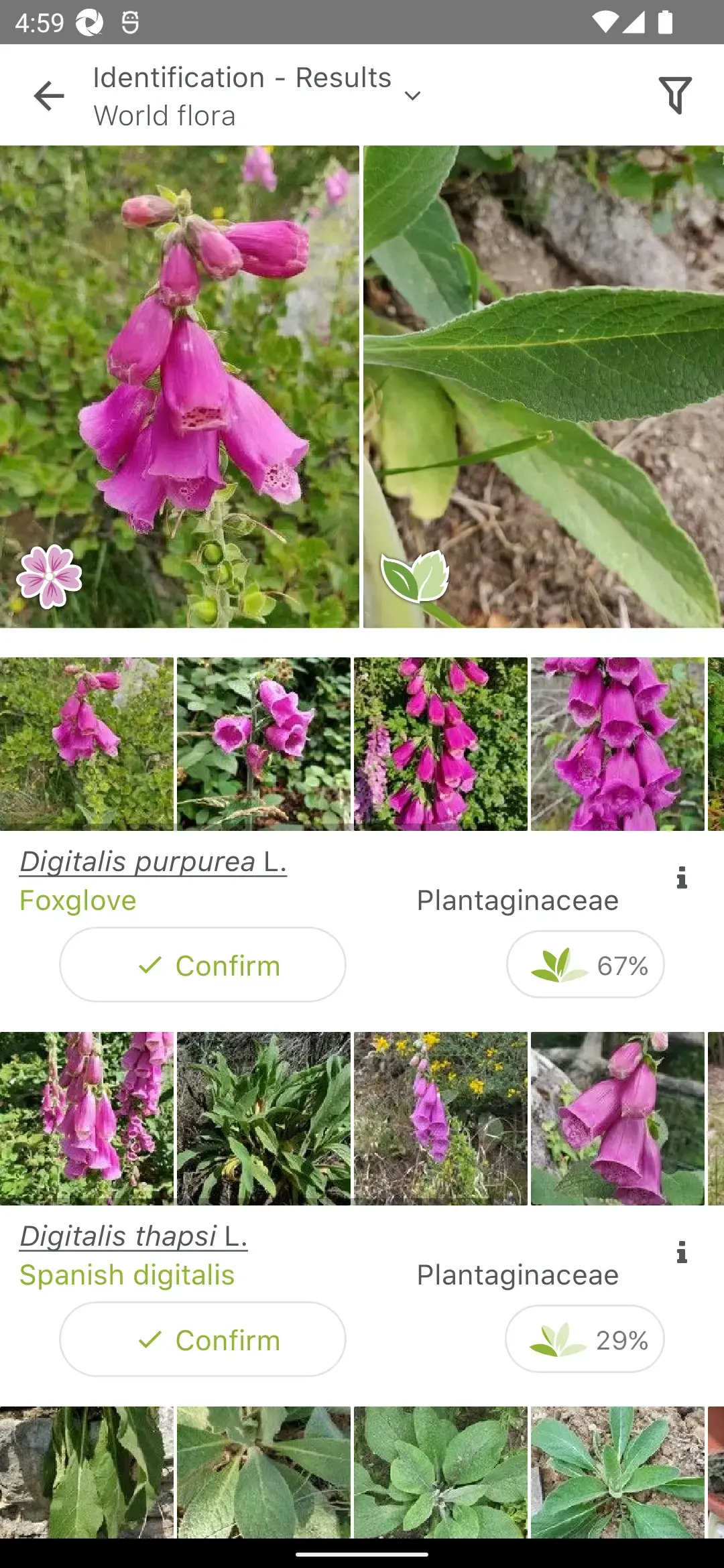
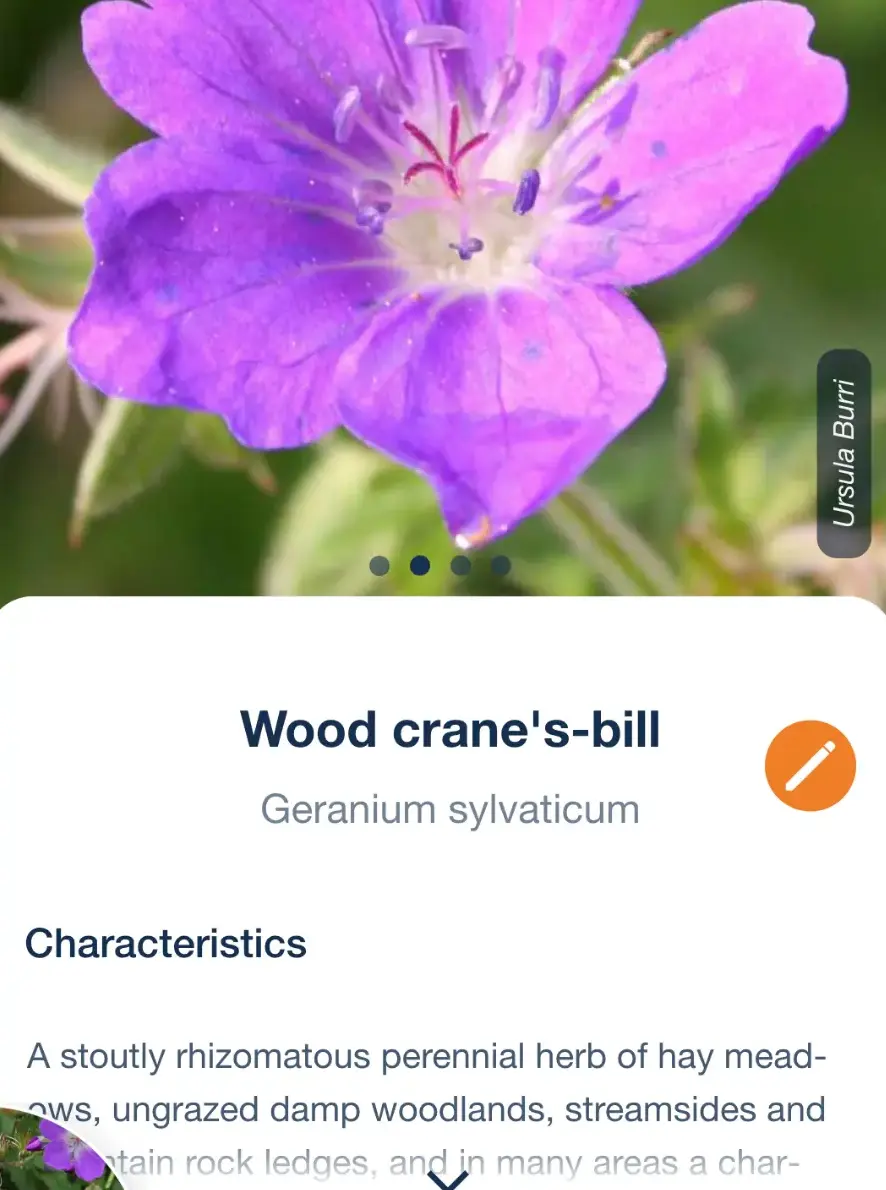
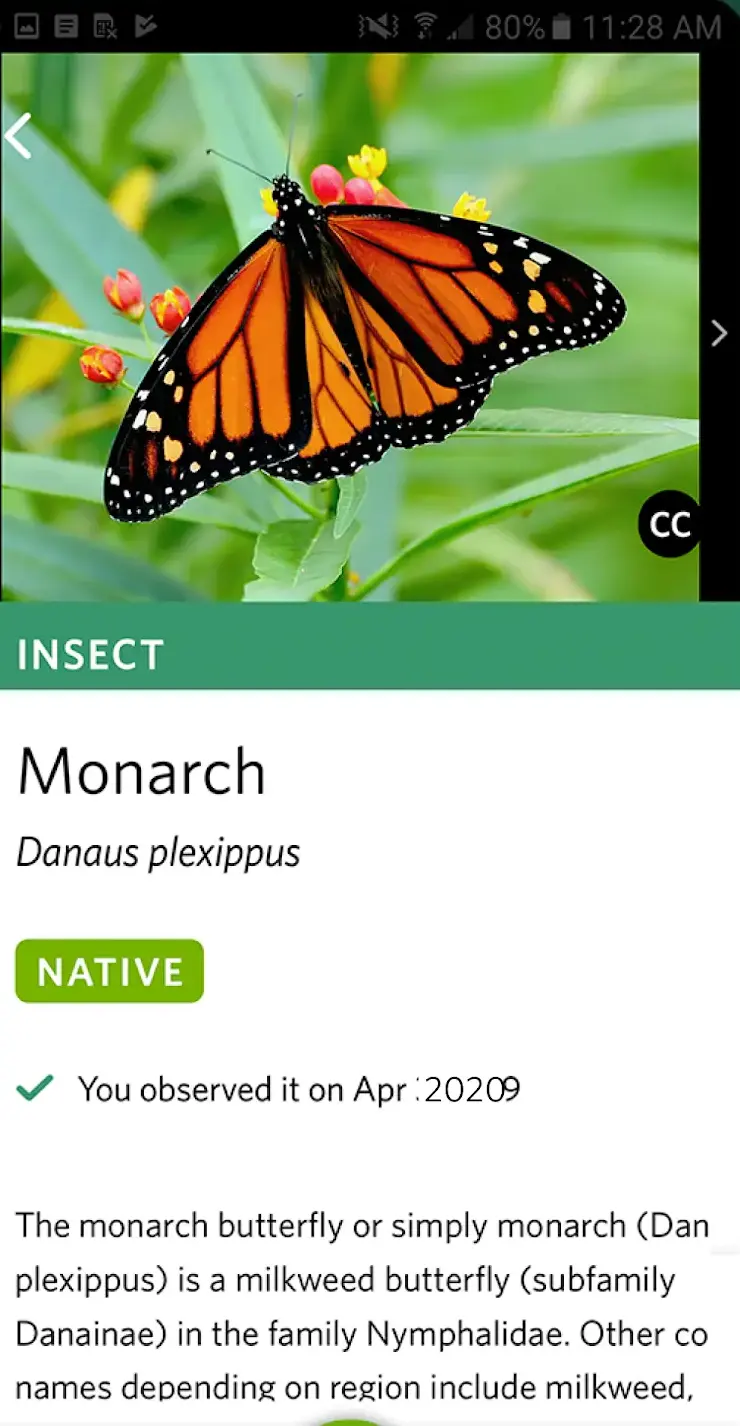
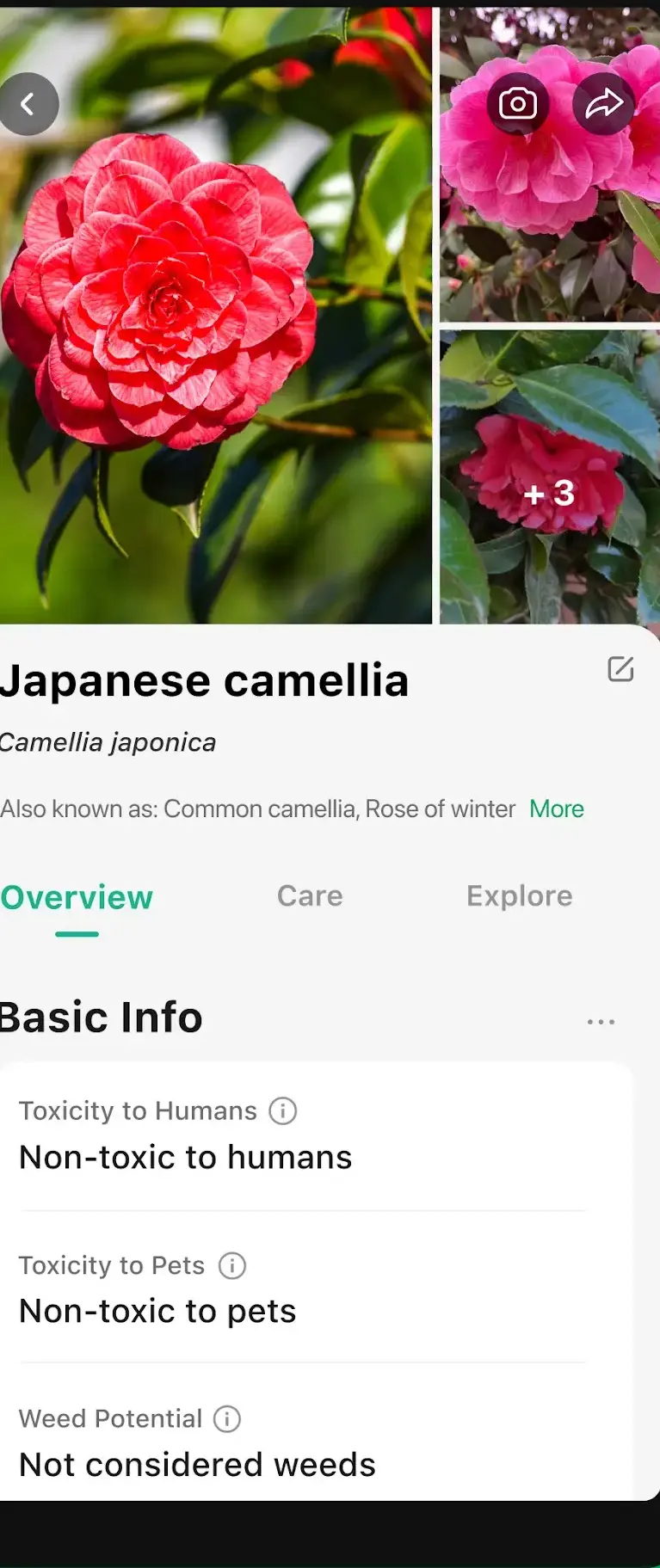
This axis splits the category and the store barely shows it. PlantNet runs as a research project: plantnet.org names CIRAD, INRAE, INRIA and IRD as its trademark owners and publishes open datasets, and the app’s own Google Play listing, read on 28 August 2026, says it makes it possible to recognise about 20,000 species. Flora Incognita's listing names the Technical University of Ilmenau and the Max Planck Institute for Biogeochemistry Jena and claims deep learning accuracy well over 90%. Seek's says its recognition comes from observations submitted to iNaturalist.org and partner sites, identified by its community.
PictureThis claims over 400,000 species at over 98% accuracy and names no method, dataset or research body anywhere; its 4.55 star average across 794,217 ratings, read on 28 August 2026, measures how people feel, not how often it is right. Plantix does another job: crop damage detection across 30 major crops. Whoever built it, a fact sheet may arrive in a language you do not read, which is where a translator with a camera mode helps.
Those are each app's own header row, not the similar apps carousel underneath, which carries other developers' labels. No listing publishes a daily identification limit, so a metered free tier announces itself by stopping you.
Every figure in this section comes from the app’s own Google Play listing, read on 28 August 2026. Nothing here is a test result, and nothing here is permission to eat anything.
Free, no ads, and it names who built it
It is the only one of the seven whose Play developer field names a university, Technische Universität Ilmenau, and its description adds the Max Planck Institute for Biogeochemistry Jena, an accuracy of well over 90% for its deep learning algorithms, and a flat statement that the app is free to use with no ads, no premium version and no subscription. Its Data safety card declares no data shared with third parties.
The shortlist, and the science project behind it
Read on 28 August 2026, the listing says a photograph of the whole plant is often not sufficient to allow a reliable identification, that flowers, fruits and leaves should be photographed first, and that the app recognises about 20,000 species. The same listing says the plants you photograph are collected and analysed by scientists, and its Data safety card declares it may share photos and videos with third parties.
For families, and no account required
The listing says its image recognition is based on observations submitted to iNaturalist.org and partner sites and identified by the iNaturalist community, that Seek identifies wildlife, plants and fungi, and that it does not require registration and does not collect any user data by default. Its Data safety card declares no data shared with third parties. It also carries the lowest star average of the seven, 3.29 on 28 August 2026.
Already installed, and a year without an update
Identifying plants and animals is one line in a general purpose listing that also covers translating text, landmarks, clothes, restaurant dishes and QR codes, and the listing closes by warning that some Lens features require an internet connection. Its Data safety card declares no data shared with third parties. The listing has not been updated since 5 August 2025, twelve months before this check, the second oldest here.
A crop doctor, not a garden app
The store title is Plantix · your crop doctor, and the description covers 30 major crops and 780+ plant damages, which is a different job from naming the plant in a hedge. It is the only one of the seven carrying the Contains ads label, and its Data safety card declares sharing location, app activity and device or other IDs.
The biggest claims, and the widest sharing
The store title is PictureThis · Plant Identifier. Its description opens on over 98% accuracy, claims over 400,000+ plant species and advertises a Toxic Plant Warning, and it names no dataset, method or research body anywhere in that text. Its Data safety card declares sharing personal info, financial info and 3 others, the widest sharing declaration of the seven alongside Picture Mushroom.
Fungi, and the oldest listing of the seven
The store title is Picture Mushroom · Mushroom ID. Its description offers a mushroom name, edibility, habitat and ways of identifying, and its Data safety card declares sharing personal info, financial info and 3 others. The listing has not been updated since 6 March 2025, seventeen months before this check, five months older than the next oldest listing here.
Recognition normally runs on a server, the wrong architecture for a wood. One app documents a way to keep collecting when the signal goes: Flora Incognita's FAQ describes an Offline Mode where a phone with no connection still records an observation from three pictures, then identifies it from the observation list once online. No other listing read here claims the same.
Google Lens is the zero effort option, over a billion installs with plant identification among its listed features, though it was last updated on 5 August 2025 and warns that some features need an internet connection. Same reflex as identifying a song playing near you. Going out without signal? Save the map area first.
Every listing carries a Data safety card, and they differ more than the apps. PlantNet declares it may share photos and videos with third parties, matching a description that says openly that your photographs are collected and analysed by scientists. Flora Incognita, Seek and Google Lens each declare no data shared with third parties. Plantix declares sharing location, app activity and device identifiers. PictureThis and Picture Mushroom each declare sharing personal info, financial info and three further types.
A permission list here looks alarming and mostly is not. Camera access is the product. Location is the one worth a decision, and switching it off is not free: Flora Incognita's FAQ says sharing location makes identification more accurate and that much of the fact sheet only appears relative to where you are. To see what an app actually used, the Privacy Dashboard logs the last 24 hours; Android's permission controls carry an only while using setting.
This one never asks the app to decide anything. PictureThis advertises a Toxic Plant Warning that flags toxic plants to keep pets, children and family safe. Treat that as a prompt: take the name, then look it up somewhere accountable. The ASPCA publishes toxic and non-toxic lists for dogs, cats and horses and warns they are not all-inclusive. The RHS list, itself not exhaustive, marks foxglove, deadly nightshade, yew, monkshood, lily of the valley and hemlock water dropwort as toxic if eaten.
Both also say what ordinary looks like, which keeps a checklist from becoming panic: the ASPCA notes that eating any plant material may cause vomiting and stomach upset in dogs and cats, and that plants it lists as non-toxic or mildly upsetting are not expected to be life threatening.
If a person has already eaten part of a plant, get advice straight away. In the United States call the Poison Help line on 1-800-222-1222, which America's Poison Centers says gives expert advice 24/7/365 at no cost, and call 911 instead if the person collapses, has a seizure, cannot breathe or cannot be woken. In the United Kingdom the RHS says to seek medical advice immediately at a hospital accident and emergency department, and 999 is the number if the person is unconscious or struggling to breathe. Take a sample of the plant with you, and do not try to make the person sick.
An animal is a different channel. The ASPCA says to contact your vet or its 24 hour animal poison hotline, which in the United States is (888) 426-4435, and to take samples of the plant along. It notes a consultation fee may apply, so the free line above is the human one.
A photograph carries colour, outline and a little texture, and no smell, no feel of a stem, no spore print. So use them for what they are good at: a name for the thing in the hedge, a record of the garden, a term to look up elsewhere. None of that buys permission to swallow. Whether something goes in a pan, a cup or onto skin is settled by a person who knows the species with it in their hand, never by a phone.
No, and some of the apps say so themselves. Picture Mushroom's terms of use state in capital letters that its results cannot be used as any basis for eating any mushroom or plant. A 2023 Clinical Toxicology study of three mushroom identification apps, on 78 specimens sent to the Victorian Poisons Information Centre and Royal Botanic Gardens Victoria, found the best correct on 49%. The Royal Horticultural Society's rule: if it is not a food plant, do not eat it.
Flora Incognita, PlantNet and Seek by iNaturalist show no advertising label and no in-app purchase line on their Google Play listings. Flora Incognita's FAQ calls the app completely free of charge and advertising, and its listing adds no premium version and no subscription. PictureThis lists purchases from $1.99 to $49.99 per item.
No. Identification needs a connection, but one app documents a way to keep collecting without one. Flora Incognita's FAQ describes an Offline Mode in which a phone with no connection still records an observation from three pictures of the plant, then identifies it from the observation list once online. Google Lens states on its listing that some features need an internet connection.
Some do and some never claim to. Flora Incognita's FAQ says that since 2025 it can identify roughly 3,000 lichen and fungus species, and Seek by iNaturalist's listing says it identifies wildlife, plants and fungi. PlantNet's listing names only plant groups. Identifying a mushroom and deciding it is edible are separate acts, and no app settles the second.
Do not wait for an app to name it, and take a piece of the plant with you or have it to hand. In the United States call the Poison Help line on 1-800-222-1222, which America's Poison Centers says gives expert advice 24/7/365 at no cost, or 911 if the person collapses, has a seizure, cannot breathe or cannot be woken. In the United Kingdom the Royal Horticultural Society says to seek medical advice immediately at a hospital accident and emergency department, or 999 if the person is unconscious or struggling to breathe, and not try to make the person sick. For an animal, seek veterinary advice and take plant samples; in the United States the ASPCA runs a 24-hour animal poison hotline on (888) 426-4435.