Settle the real question first: is there anything left to hear where you live? US police forces have been moving onto encrypted talkgroups for years, and encryption is absolute. The apps mislead in a second way too: they are not radios. They play volunteer run internet feeds, so they need data and run behind. Aviation, marine and rail are where the hobby still reliably works.
Scanner Radio is our best overall pick because its listing on 28 August 2026 showed 4.7 stars and free installation funded by ads.
Police Scanner Live Radio is our best free pick because its listing on 28 August 2026 showed 4.8 stars and free installation, paid for with ads.
LiveATC for Android is our aviation pick because on 3 September 2026 it was the one app here sold outright, at $3.99 with no ads label.
Data checked: 3 September 2026.
An encrypted talkgroup is silent to everyone outside the agency using it. No app gets around that, and neither does a receiver at any price. Once a department encrypts, its feeds vanish from the directories.
There is no federal mandate and no single switching date, only a long run of local decisions pushed along by California Department of Justice bulletin 20-09-CJIS of 12 October 2020. It required agencies to protect criminal justice and personal data carried on radio, by encryption or by a policy limiting what goes out over the air, and many chose encryption. Denver, Baltimore, New York City and the Los Angeles County Sheriff's Department are now fully or partly closed, and smaller counties follow every month.
Coverage is patchy and shrinking rather than gone: fire and EMS dispatch often stays open when police traffic closes, and sheriff and state agencies vary county by county. Search your own county in an app's directory before you judge the app. An empty result describes your local agencies, not the software.
An Android phone has no wideband radio receiver. What a scanner app plays is an internet stream: a volunteer runs a real scanner, feeds the audio into a network such as Broadcastify, and the app fetches it. Everything awkward about these apps follows from that.
Broadcastify's own support pages say it no longer maintains a phone store app, pointing listeners to third party apps and its mobile site. Its old Play listing returned nothing in August 2026.
In the United Kingdom the emergency services run encrypted digital radio, so there is nothing to relay and no feed to subscribe to. Germany's BOS network is the same, most of the EU runs encrypted TETRA or TETRAPOL, and Canada and Australia are mixed, their large metropolitan systems mostly closed. Even where listening would be lawful, an encrypted network produces nothing to hear. Outside the US, treat these apps as aviation, marine, rail, weather and amateur radio players that carry some American public safety audio.
This is not clever software: you are choosing a directory browser wrapped around a stream player, so judge on directory size, ad load and update date.
First install for most people
Scanner Radio by GordonEdwards.net LLC, listed as Scanner Radio · Police Scanner. The obvious first install: 4.7 from about 499,000 reviews, 10 million plus downloads, updated 17 July 2026. The listing claims over 8,000 feeds spanning police, fire, NOAA weather radio, amateur repeaters, air traffic and marine, browsable by location or genre. Contains ads and in-app purchases, and its Data Safety card says data is not encrypted and may be shared with third parties.
↑ Back to the comparisonSecond opinion on your county
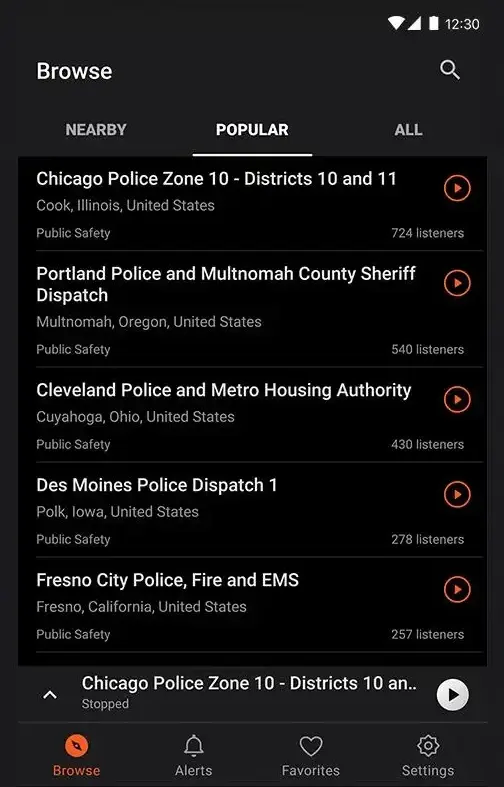
Police Scanner Live Radio, listed as Police Scanner · Live Radio. Rated 4.8 from about 143,000 reviews, 10 million plus downloads, updated 22 April 2026. A comparable directory carrying the same Contains ads and In-app purchases labels, and a developer credited as Police Scanner, Scanner Live Radio App rather than a company. Its Data Safety card, unlike Scanner Radio's, says no data is shared with third parties.
↑ Back to the comparisonFront end for your own receiver
Rdio Scanner by Saubeo Solutions. Only if you already run a receiver: the listing states it is the client for an open source server you host yourself. Rated 3.2 from about 690 reviews, updated 24 August 2026, with ads and a single in-app purchase the listing prices at $39.99.
↑ Back to the comparisonLeft behind since 2021
One to skip: Scanner 911 by XYWARE still ranks well at 4.6, but its last Play update is dated June 2021, more than five years before this check.
↑ Back to the comparison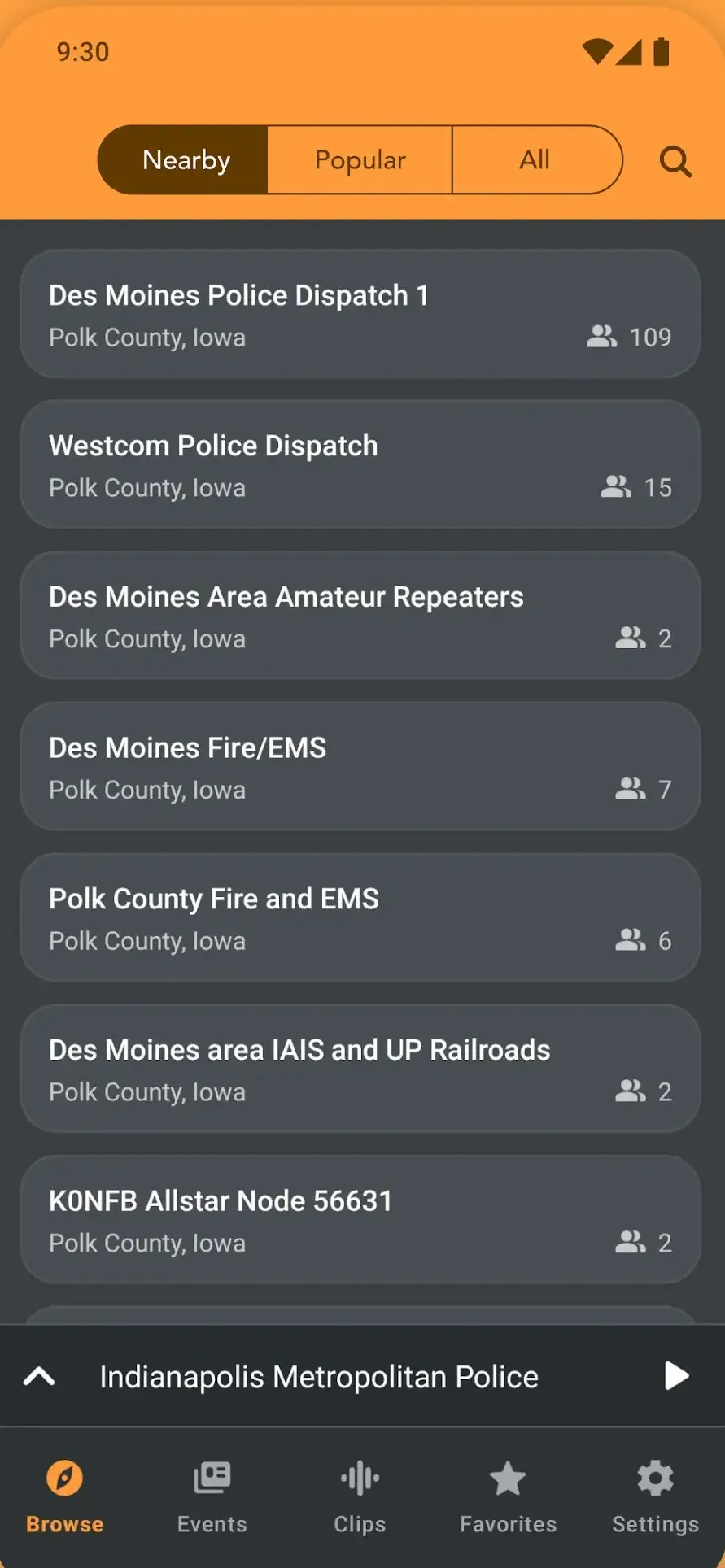
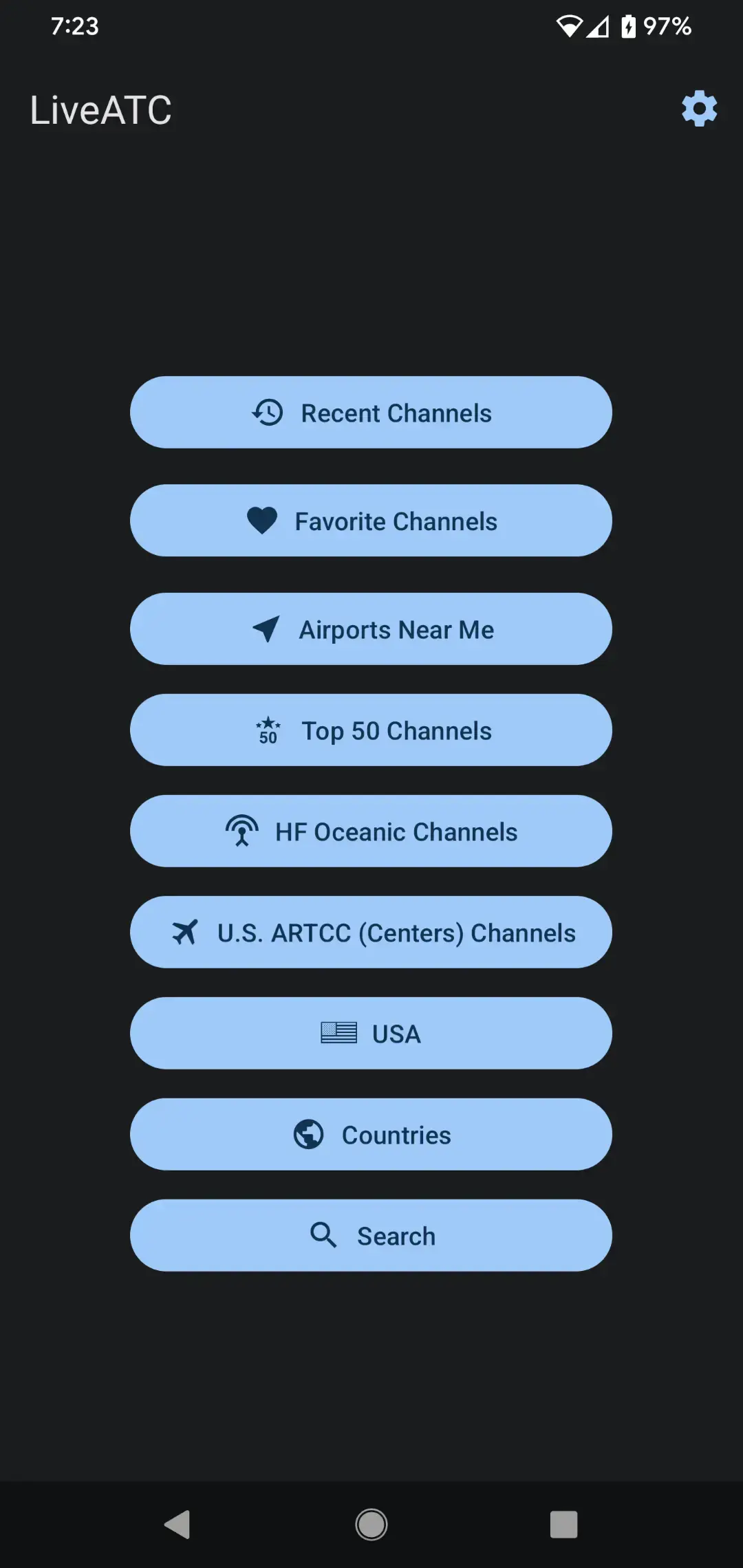
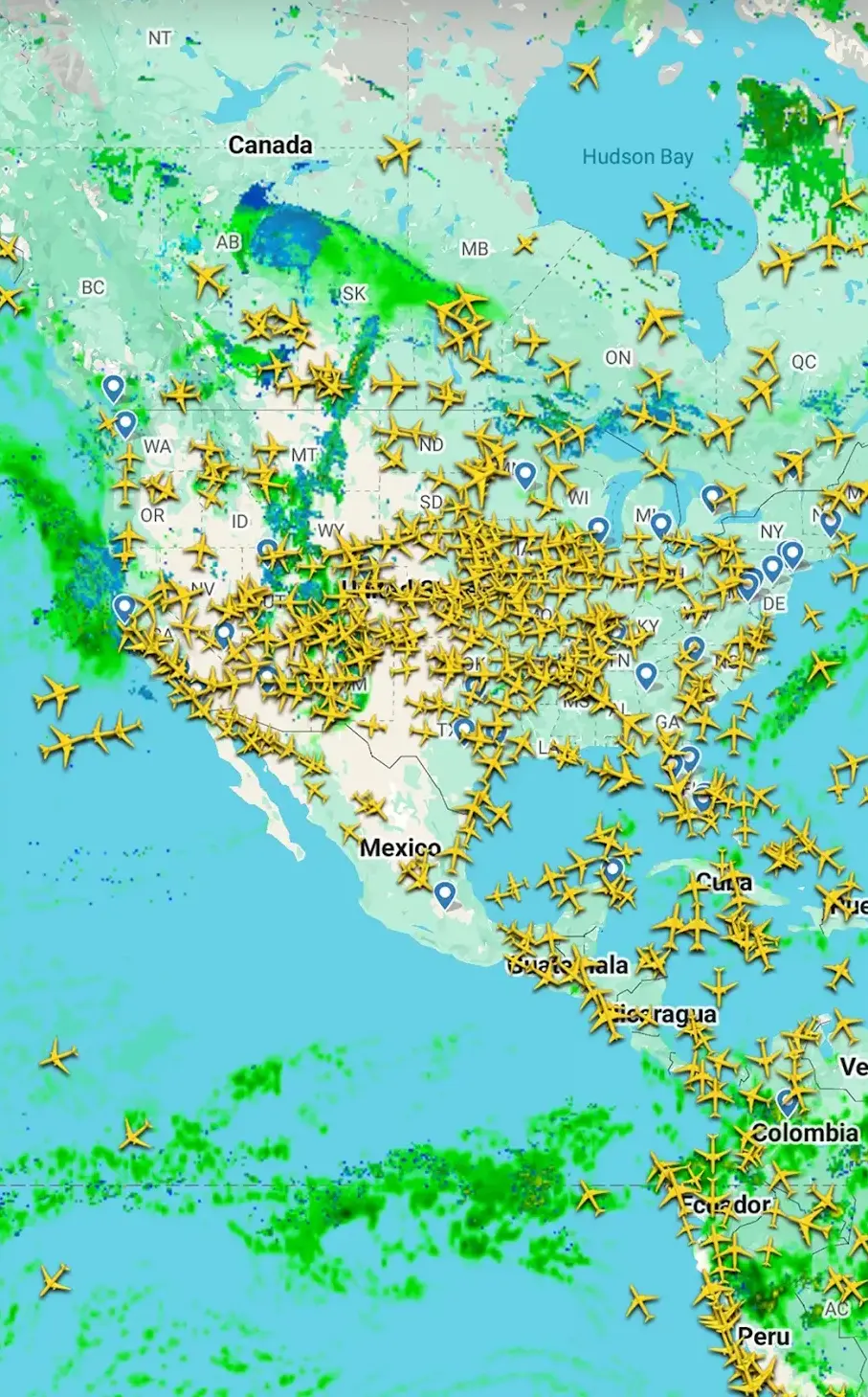
Air traffic control is analogue AM on VHF almost everywhere and unencrypted by design, so those feeds are stable in a way police feeds are not. Scanner Radio's aviation genre is the simplest way in.
Air traffic, bought outright
LiveATC also publishes its own paid client, LiveATC for Android, at 3.99 dollars, rated 3.8 from about 5,030 reviews, updated 3 December 2025. It carries no ads label and no in-app purchases: the 3.99 dollars is the whole price.
↑ Back to the comparisonA map next to the audio helps.
Puts a callsign on the map
Flightradar24 Flight Tracker by Flightradar24 AB, 4.5 from about 654,000 reviews, updated 11 August 2026, names the callsign you are hearing, with ads and in-app purchases.
↑ Back to the comparisonMarine VHF is open too and coastal feeds are common.
Shipping on the same map
MarineTraffic Ship Tracking, listed as MarineTraffic · Ship Tracking, fills the same map role for shipping on a weak 2.9 rating from about 129,000 reviews, updated 19 August 2026, with ads and in-app purchases.
↑ Back to the comparisonNorth American railroad road channels are still analogue AM and VHF, so whether you can hear them depends on a volunteer running a feed near the line. Europe's GSM-R is cellular, so there is nothing there for a scanner.
In the United States, receiving public safety transmissions is generally lawful, but several states restrict scanners. Florida goes furthest: statute 843.16 makes it a first degree misdemeanour to install or transport radio equipment tuned to police or fire rescue frequencies in a motor vehicle at all, with narrow exemptions for emergency and sheriff approved crime watch vehicles, licensed amateur operators, news organisations and alarm contractors. No weapon, drug or crime in progress is needed. A separate Florida statute, 934.215, covers using a two way communications device to further a felony. Indiana, Kentucky, Minnesota, New Jersey and New York have their own in vehicle or in commission of a crime provisions.
In the UK, the Wireless Telegraphy Act 2006 makes it an offence to use radio apparatus to obtain the contents of a message you are not authorised to receive, and a separate offence to pass on what you hear. German law takes the same position. Both are aimed at radio receivers rather than internet stream players, and in both countries the traffic is encrypted anyway. Check your own jurisdiction rather than assuming the American one travels.
Two things this article will not help with: defeating encryption, and using a scanner to evade the police, which is what those statutes punish.
Where an app sells a paid tier, read what it covers before paying: the listings above price theirs as in-app purchases rather than as access to the feeds.
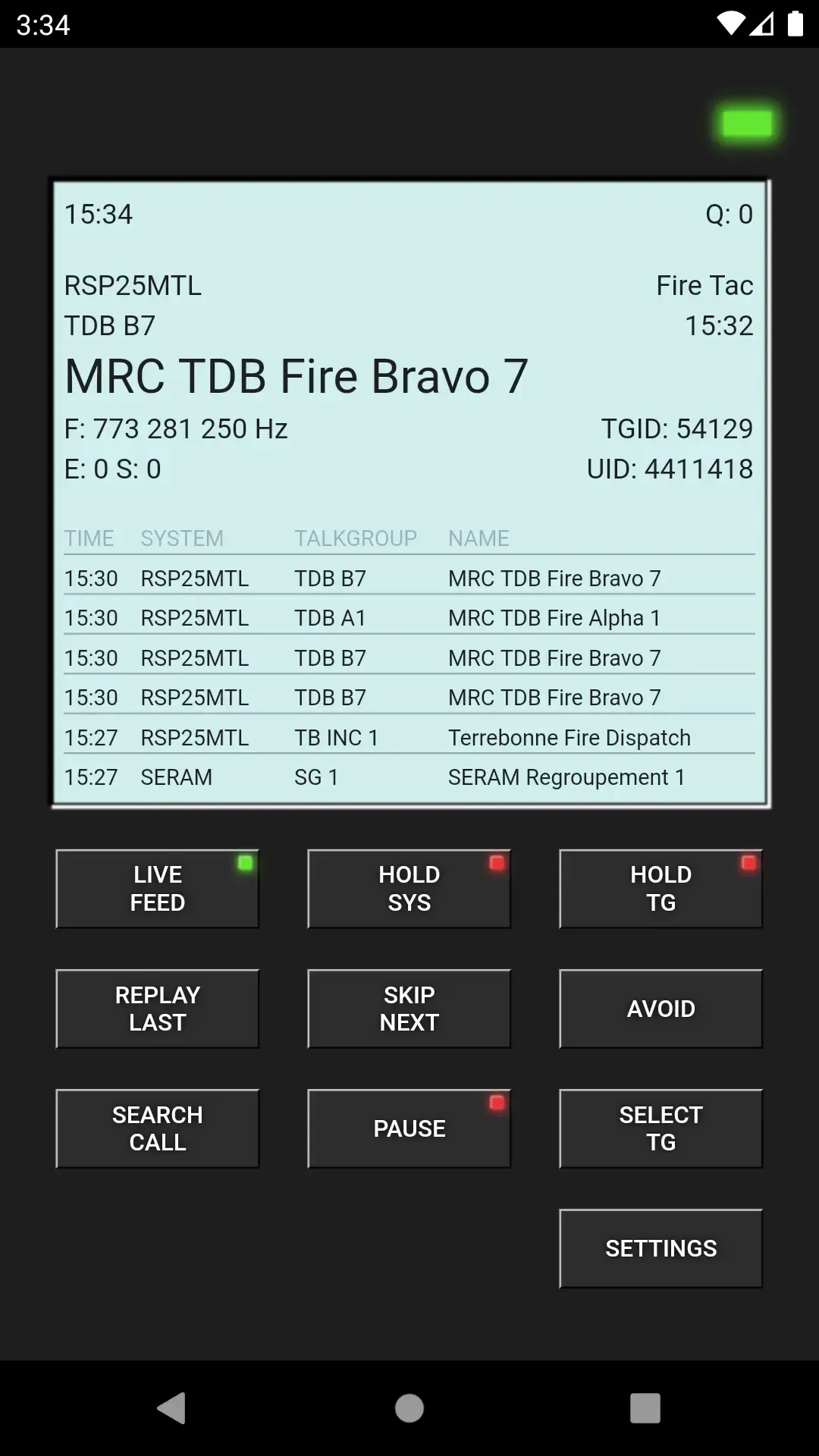
If the directory is empty for your area, the next step is hardware. An RTL-SDR style USB dongle and an OTG cable turn the phone into a receiver.
Dongle driver
SDR Touch by Signalware Ltd is the usual driver app: its listing names RTL-SDR, NeSDR, SDRplay and HackRF support and 20 MHz to 2.2 GHz coverage depending on the dongle, on a 2.9 rating from about 5,100 reviews. It carries no ads label and one in-app purchase the listing prices at $11.99.
↑ Back to the comparisonSpectrum view
RF Analyzer is the spectrum analyser alternative, rated 3.8 from about 1,100 reviews, with no ads label and one in-app purchase at $8.99.
↑ Back to the comparisonBoth demodulate analogue modes, so trunked digital systems need other software and encrypted traffic stays unreadable. A dongle solves a coverage gap, never an encryption one. More gear like this sits in tools and utilities, and for severe weather a weather app will warn you faster than any feed.
In parts of the United States, yes, in a shrinking number of them. An encrypted system does not fade, its feed simply disappears, so search your own county in an app directory first. Fire and EMS dispatch frequently stays open where police traffic has closed, and a feed can go quiet when its volunteer is offline.
They stream. An Android phone has no wideband radio receiver, so it plays audio a volunteer relays from a real scanner into a network such as Broadcastify. You need Wi-Fi or mobile data, and what you hear arrives with the delay of the relay chain rather than live.
It depends where you are. In the United States receiving public safety transmissions is generally lawful, but Florida statute 843.16 bans transporting radio equipment tuned to police or fire frequencies in a motor vehicle at all, with narrow exemptions; Indiana, Kentucky, Minnesota, New Jersey and New York have their own in vehicle or in commission of a crime rules. UK and German law targets radio receivers rather than stream players.
No. Encryption is not a coverage problem that better hardware solves. An RTL-SDR dongle with an app such as SDR Touch reaches frequencies no streaming app carries, but it demodulates only analogue modes: encrypted traffic stays unreadable and trunked digital systems need separate software.
 12 Best TV Streaming Apps for AndroidEntertainment