Updated September 2026 · every app listing re-read on 1 September 2026, refreshing 4 review counts, and the verdict moved below the comparison table so the picks sit next to the evidence
Five free English dictionaries for Android, compared on the two things a store page makes hardest to see: whether the app answers with no connection, and what the free tier quietly withholds.
English Dictionary - Offline from Livio is our best overall because its listing, read 20 August 2026, claims over 608,000 definitions, free, no ads label, nothing to buy.
Dictionary - WordWeb is our best edited dictionary because its listing, read 3 September 2026, itemises 225,000 word sense definitions, free, no ads label, nothing to buy.
Oxford Dictionary and Thesaurus is our depth pick because its listing, read 3 September 2026, bundles 15 Oxford dictionaries, free to install, Contains ads label, purchases up to $39.99 per item.
Data checked: 3 September 2026.
Best overall
Rating 4.6 from 415,180 reviews · Installs 10,000,000+ · Free, no in-app purchases listed · Developer Livio · Requires Android 6.0 or newer · Listing updated 1 June 2026 · Data Safety declares no data collected and none shared with third parties · Contains ads: No · checked 1 September 2026
Google Play listing · 4.6 (415,180) · read 1 September 2026
This is the pick for most people. It is free, its Play listing carries no advertising label and nothing at all to buy, and it holds the highest rating of the five here at 4.6 from 415,180 reviews. The blunt caveat is where the words come from: the same listing says the content is powered by English Wiktionary, which is community edited rather than an editorially curated house dictionary.
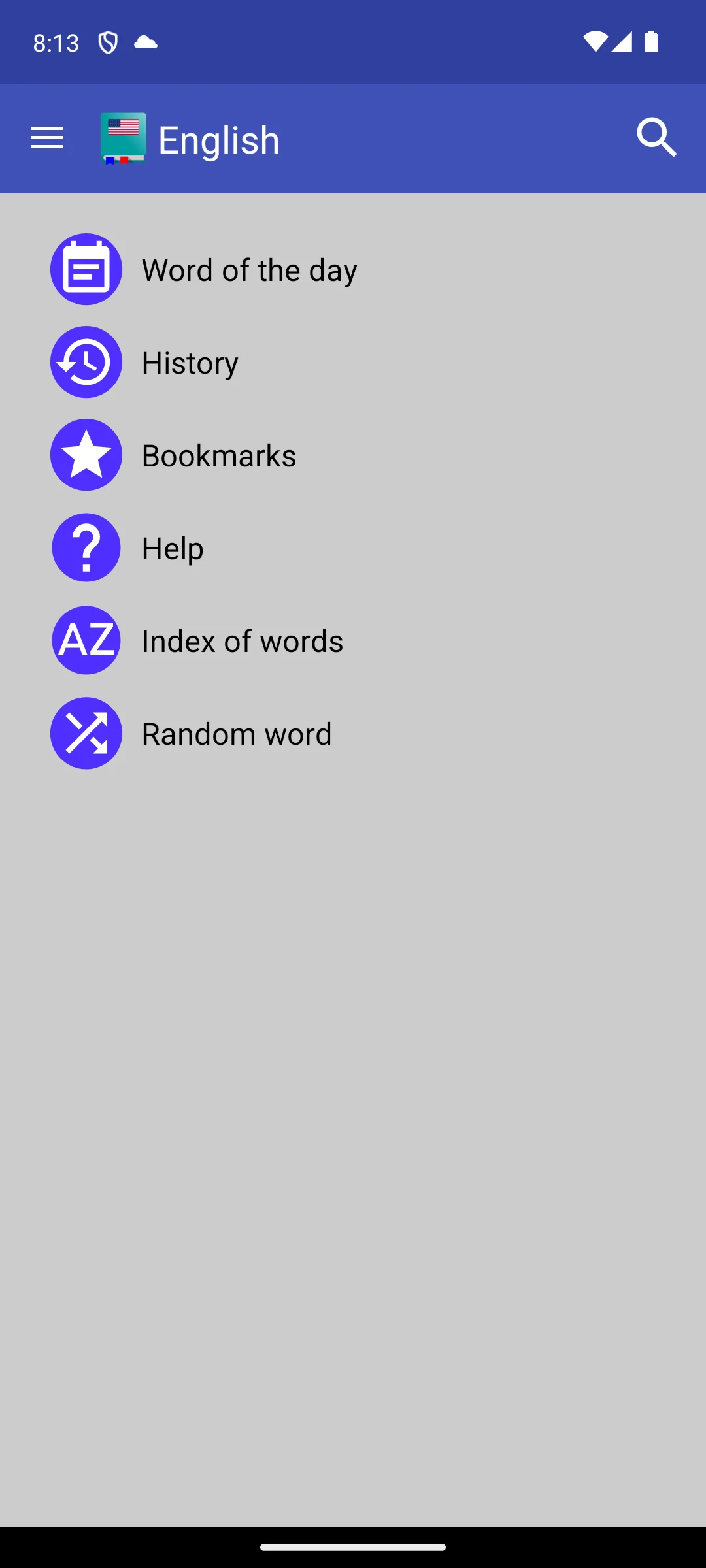
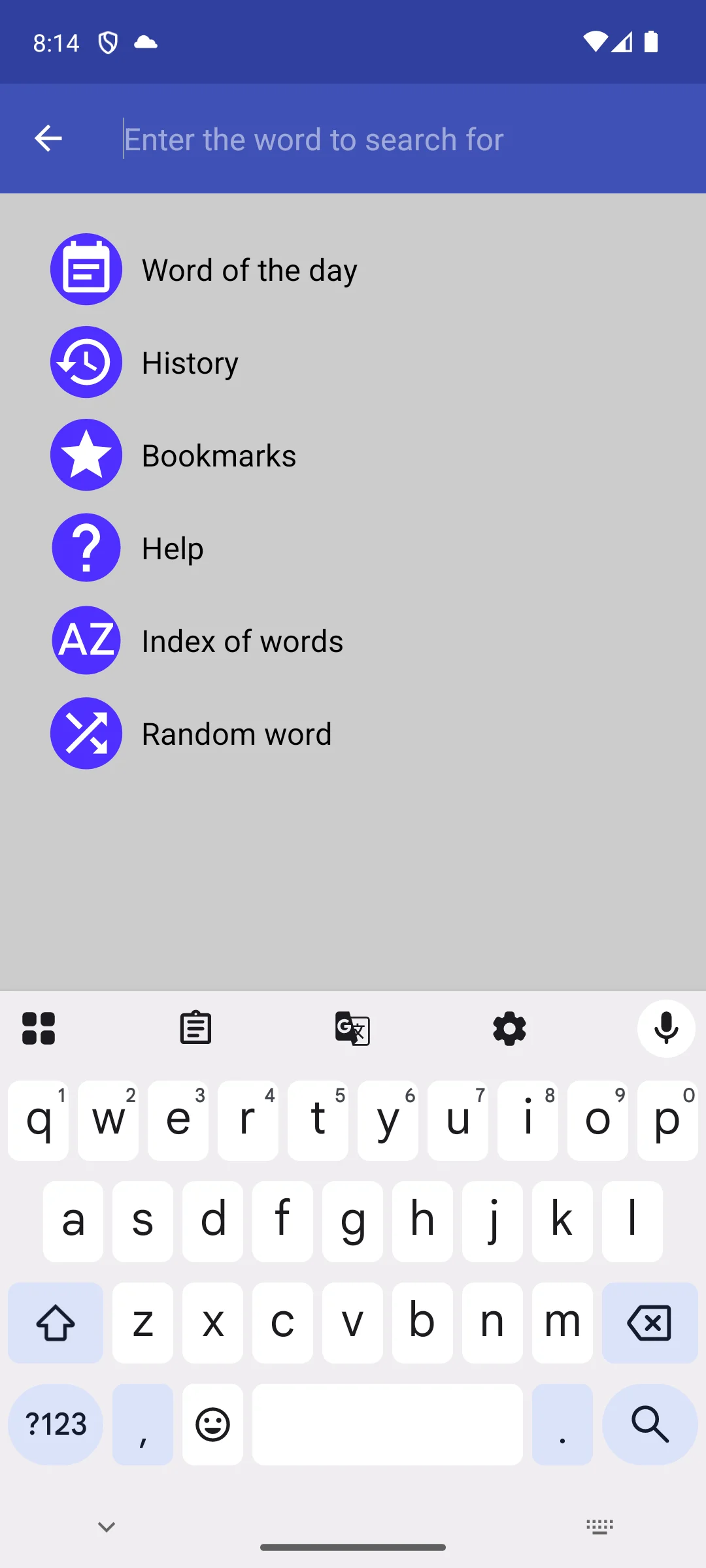
On the question this page exists to answer, its own listing is explicit. The app is described there as a free offline English dictionary, and the listing states that no internet connection is required. There is no separate dictionary pack to fetch after installing, which is exactly what separates it from the Oxford entry further down. Two qualifications come from the same listing rather than from anywhere else. The app declares an INTERNET permission, described as retrieving the definition of unknown words, so offline covers the word list it ships with rather than every possible lookup. And pronunciation leans on the phone: the listing notes that word pronunciation works only if voice data have been installed in the phone as a text to speech engine.
Skip this one if: you want an editorially curated dictionary rather than one built on a community edited source.
Choose it over Dictionary - WordWeb when raw coverage matters more than edited entries, and the other way round when it does not.
Best edited dictionary
Rating 4.4 from 138,179 reviews · Installs 5,000,000+ · Free, no in-app purchases listed · Developer WordWeb Software · Listing updated 20 June 2026 · Google Play Editors’ Choice badge on the listing · Data Safety declares no data collected and none shared with third parties · Contains ads: No · checked 20 August 2026
Google Play listing · 4.4 (138,179) · read 20 August 2026
Take this one if you want a properly edited dictionary without the usual free app baggage. It is free, its Play listing carries no advertising label and nothing to buy, that listing states that no internet connection is required to use it, and it rates 4.4 from 138,179 reviews. The blunt catch is spoken audio, and it is blunt because the developer answers it in two places and the two answers do not agree.
The disagreement is worth setting out, because it decides whether this app suits you. Its Play listing, read on 20 August 2026, says Audio pronunciations are available with the separate Audio Edition app
, and itemises 85,000 text pronunciations with no recorded audio line at all. WordWeb Software’s own Android page, read the same day, describes the very package that link opens as Full audio pronunciations and many related words
. Both pages belong to the developer. This page follows the listing, because the listing is the one that itemises what ships, but anyone installing this specifically for recorded pronunciation should treat the free app as unsettled rather than settled either way. The number 70,000 has the same shape and a cleaner answer. The listing itemises the database as 285,000 words, phrases and derived forms, 225,000 word sense definitions, 70,000 usage examples and 85,000 text pronunciations. The developer’s Android page gives no count for usage examples and attaches 70,000 to something else entirely: 70,000 offline audio pronunciations, in the Audio Edition. Same number, two different things, both of them the developer’s own.
Skip this one if: recorded pronunciation is the reason you are installing a dictionary at all, because the developer’s own two pages do not agree that this one has it.
The paid sibling is the one unambiguous route to recorded audio. WordWeb Audio Dictionary is listed at $3.99 in the same storefront, carries no advertising label either, and its own database list names 70,000 audio pronunciations outright rather than leaving them to be inferred. It is also the only one of the seven listings read here that publishes a storage figure: it requires about 280MB of space, which is worth knowing before fetching anything on mobile data.
Best for depth
Rating 4.4 from 541,870 reviews · Installs 50,000,000+ · Free to install, in-app purchases $0.99 to $39.99 per item · Developer MobiSystems · Requires Android 8.0 or newer · Listing updated 13 August 2026 · Data Safety declares no data shared with third parties, collection of Financial info, App activity and 2 others, that data is not encrypted, and that data cannot be deleted · Contains ads: Yes · checked 3 September 2026
Google Play listing · 4.4 (541,870) · read 3 September 2026
This has the deepest content of the five by a distance, and the heaviest terms attached to it. Its Play listing carries the Contains ads label and in-app purchases from $0.99 to $39.99 per item, and offline use is not part of the free tier at all. The blunt catch is its own Data Safety section, which lists the collected types as Financial info, App activity and 2 others, and declares that data is not encrypted and cannot be deleted.
MobiSystems answers the offline question itself, and its answer is the reason this entry sits third rather than first. The product FAQ on the developer’s own site, read on 20 August 2026, asks whether the app works offline and replies Yes. With Premium, you can download 15 Oxford Dictionaries. Once downloaded, definitions, thesaurus content, pronunciations, and more are available without an internet connection
(mobisystems.com). Offline here is therefore two things in sequence: a purchase, and a separate download after it. Read the top of that same page and you would not know it: its feature summary promises the database available even without an internet connection
with no mention of Premium at all, and only the FAQ further down attaches the condition. The listing itself agrees with the FAQ rather than the summary, filing offline under a heading that reads GET THE MOST WITH PREMIUM. The FAQ is equally plain about what the free tier does give, and it is not nothing: the 15 Oxford dictionaries, word definitions, example sentences, Word of the Day, Favourites, Recent Searches, and advanced search tools including camera and voice search. What Premium adds on top is complete audio pronunciations, offline mode, the full English Thesaurus and an ad free experience, all inside the same purchase.
Skip this one if: you want the dictionary to work with no connection without paying, or the Data Safety declarations above give you pause.
Choose it over the two free picks only when the bilingual dictionaries or the Oxford editorial content are the reason you are here.
Best broad free reference
Rating 4.1 from 969,309 reviews · Installs 10,000,000+ · Free, no in-app purchases listed · Developer Dictionary LLC · Requires Android 8.0 or newer · Listing updated 29 July 2026 · Data Safety declares no data shared with third parties, collection of App activity, App info and performance, and Device or other IDs, encrypted in transit, and deletion on request · Contains ads: Yes · checked 1 September 2026
Google Play listing · 4.1 (969,309) · read 1 September 2026
This is the broadest free general reference of the five, and the one whose limits are worth understanding before you lean on it. Its Play listing carries the Contains ads label and shows nothing whatever to buy, which together mean there is no purchase that takes the advertising away. It rates 4.1 from 969,309 reviews. The blunt catch is offline: its listing describes no offline mode, and it is the only one of the five that makes no offline claim of any kind.
Read this first. If you ever bought anything from the paid edition that Google Play no longer lists, the publisher answers that on its own help centre, and the answer is blunt. Its refund article, read on 1 September 2026, states that all app and in-app purchases are final sale and not refundable, and adds Discontinued apps or in-app purchases are also not eligible for a refund
(help.dictionary.com). Nothing on the current listing asks for money, so this is history rather than a warning about the app you would install today.
That last point needs stating precisely, because a finding about a listing is not a finding about the world. What can be checked today is this: the other four listings each describe their offline behaviour in their own words, and this one does not mention the subject at all. That is a statement about the listing as read on 1 September 2026, not a measurement of the app, and this page no longer dresses it up as more. The developer’s own site narrows the gap rather than closing it. Its help centre, read on 1 September 2026, publishes no article on using the app without a connection, but its article on hearing a word says of the pronunciation feature that you can listen to pronunciations when online
(help.dictionary.com). That is one named feature the developer itself ties to a connection, and it is still not a statement about whether a plain lookup works without one. What can also be checked is the package that used to carry the paid edition: com.dictionary.paid returns not found on Google Play, re checked on 20 August 2026 alongside a control request for the free package, which answered normally on the same pass. On coverage the listing is not modest either, describing more than two million definitions and synonyms drawn from Dictionary.com and Thesaurus.com, alongside idioms, rhymes, example sentences and grammar notes.
Skip this one if: you need a dictionary that is published as working without a signal, because this is the one listing here that does not say so either way.
Choose it over the Oxford entry when you want breadth for nothing rather than depth for a subscription, and the other way round when a lookup has to keep working underground.
Best for American English
Rating 3.6 from 519,791 reviews · Installs 50,000,000+ · Free to install, in-app purchases $1.99 to $9.99 per item · Developer Merriam-Webster Inc. · Requires Android 6.0 or newer · Listing updated 29 June 2026 · Data Safety declares sharing of Location, App activity and 2 others with third parties, collection of Location, Personal info and 3 others, encrypted in transit, with deletion on request · Contains ads: Yes · checked 2 September 2026
Google Play listing · 3.6 (519,789) · read 2 September 2026
This is the American English reference of the group, and the only one of the five whose Data Safety section declares that it shares data with third parties, naming Location and App activity among the types. Its Play listing carries the Contains ads label and rates 3.6 from 519,789 reviews, the lowest of the five. The blunt catch is what offline actually covers here: definitions and synonyms work with no connection, and the recorded audio does not, because its own listing puts audio on the other side of that line.
Read the offline sentence in full before choosing this one for a flight. Its Play listing, read on 1 September 2026, promises complete access to definitions and synonyms whether or not you are connected, and then names three things that still need one: You will need a connection to view illustrations, hear audio pronunciations, and use voice search
. The recorded audio is on the wrong side of that line, and it is genuinely recorded audio: the same listing describes it in its feature list as Audio Pronunciations: voiced by real English speakers, not text-to-speech robots
. Two documented routes lead away from the advertising, and the in-app purchases are not automatically either of them: the listing describes those as additional vocabulary building resources, which is content rather than the removal of advertising. The first route is a subscription, stated on that same listing in its own words: The app is free, and supported by ads. To remove ads, a subscription is available
. The second is a separate app, Dictionary - M-W Premium, listed at $7.99, whose feature list opens with No ads
and whose Premium content adds over 1000 graphical illustrations and over 15,000 additional entries covering people and places.
Skip this one if: you want a dictionary with no advertising and no payment, in which case the two entries at the top of this page already qualify.
Choose it over the two free picks when American English usage and recorded audio are the reason you are looking, and accept the advertising or the subscription as the price.
Five checks separate a dictionary worth keeping from one worth uninstalling, and every one of them takes seconds on the listing or in the app.
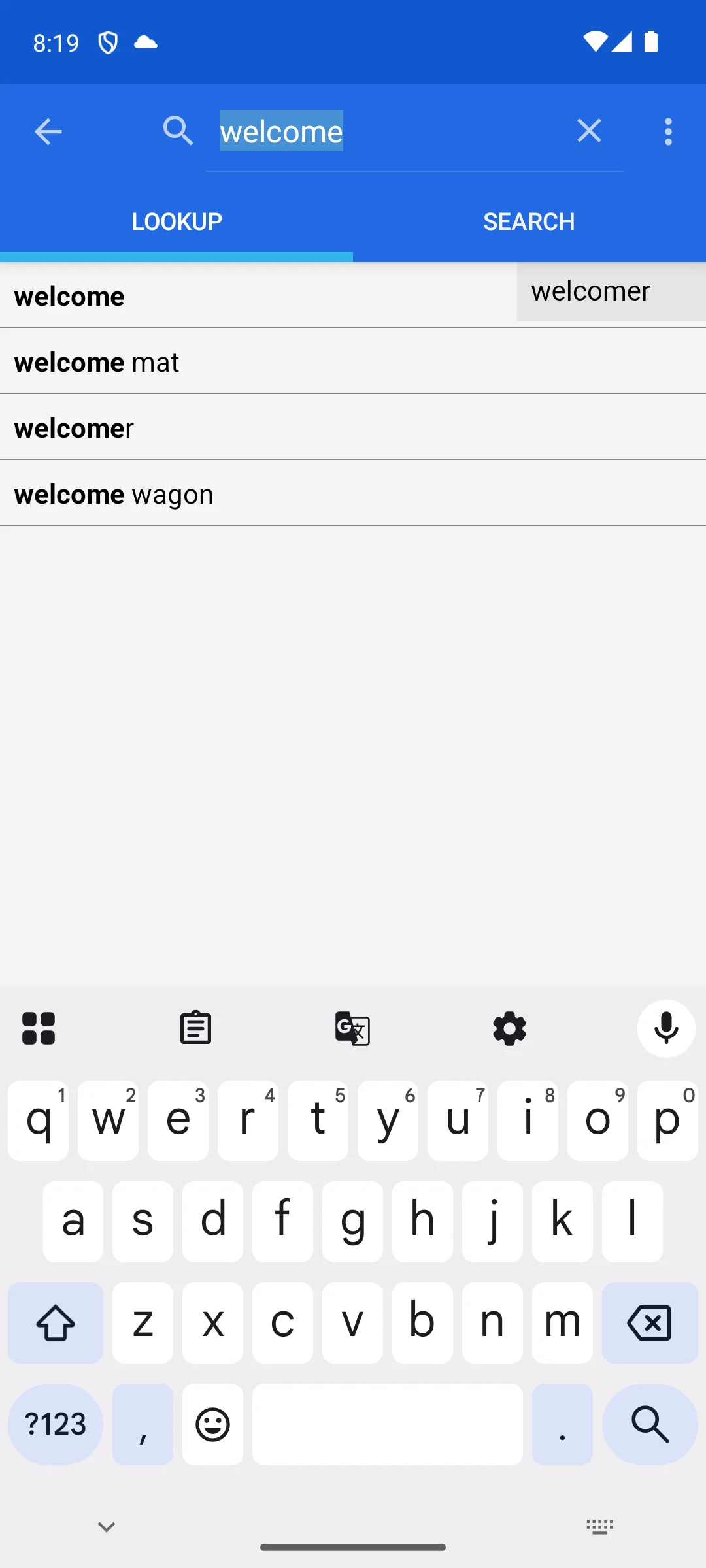
This is the column the page is really about, and it does not reduce to yes or no. English Dictionary - Offline and Dictionary - WordWeb hold the word list inside the app, and both listings say in their own words that no internet connection is required; neither asks for a separate download afterwards. Oxford Dictionary and Thesaurus is offline only after a Premium purchase and then a download of the dictionaries, which its developer’s own FAQ states plainly. Dictionary - Merriam-Webster is offline for definitions and synonyms and online for illustrations, audio and voice search, a split its listing spells out itself. Dictionary.com describes no offline capability on its listing at all. Four different answers in five rows is why this sits in the table rather than in a footnote.
Advertising is not a given on a free dictionary. Two of the five carry no Contains ads label on Google Play at all, English Dictionary - Offline and Dictionary - WordWeb, and both are free with no in-app purchases. The other three carry the label, and they differ in what you can do about it. Oxford and Merriam-Webster both document a paid route away from advertising. Dictionary.com documents none, because its listing offers nothing to buy, which makes the advertising a permanent condition of using it rather than a tier. This page reports only whether that label is present on a listing, because presence is all the label itself records. It does not separate a banner at the edge from a full screen interstitial, and it counts nothing, so it is a yes or no and not a measure of how much advertising you will meet.
Exactly one of the seven listings read on 20 August 2026 publishes a size. WordWeb Audio Dictionary’s listing states that it requires about 280MB of space, which is a published number from the developer rather than an estimate. The other six say nothing on the subject, and the Google Play web listing does not show a download size either. So the honest form of the answer is narrow rather than absolute: one of the seven publishes a figure, six do not, and for those six the app’s own settings screen is the place to look before fetching anything on mobile data.
A dictionary needs very little, and these mostly prove it. English Dictionary - Offline and Dictionary - WordWeb each declare no data collected and none shared with third parties. Oxford Dictionary and Thesaurus names Financial info and App activity among its collected types and declares that data is not encrypted and cannot be deleted. Dictionary - Merriam-Webster is the only one declaring that it shares data with third parties, and it names Location among the shared types. Those are the developers’ own declarations on their own listings rather than an independent audit, and they are the part a reader can check without installing anything.
For the wider field around this one, our guide to language learning apps covers the study side, and the Books, News and Education hub collects the rest of the reference tools.
For most people, English Dictionary - Offline from Livio. It is free, its Play listing carries no advertising label and nothing to buy, it claims more than 608,000 definitions held in the app itself, and at 4.6 it holds the highest rating of the five here. If you would rather have an editorially curated dictionary than one built on English Wiktionary, Dictionary - WordWeb is the better pick and is equally free of both advertising and purchases. Checked 20 August 2026.
Two work offline outright, one works offline only after paying, one works offline in part, and one does not describe offline use at all. English Dictionary - Offline and Dictionary - WordWeb both hold the word list in the app and both listings say no internet connection is required. Oxford Dictionary and Thesaurus needs a Premium purchase and then a download of the dictionaries, which the developer states in its own product FAQ. Dictionary - Merriam-Webster gives you definitions and synonyms with no connection but needs one for illustrations, audio pronunciations and voice search. Dictionary.com's listing describes no offline mode. Checked 20 August 2026.
It depends entirely on the app, which is why this page splits it from price. On English Dictionary - Offline and Dictionary.com the answer is nothing at all, because neither sells anything inside the app. Dictionary - WordWeb sells nothing inside the app either, and the one thing in question is spoken audio: its Play listing puts recorded pronunciations in a separate paid app at $3.99, while the developer's own website describes the free app as having them, so treat that one as unsettled. Oxford Dictionary and Thesaurus withholds the most: its developer's FAQ places offline mode, complete audio pronunciations, the full English thesaurus and the removal of advertising behind Premium, while leaving definitions, example sentences and camera and voice search in the free tier. Merriam-Webster's free tier gives the whole dictionary with advertising in it, and its listing sells additional vocabulary building resources on top of that at $1.99 to $9.99 per item. Checked 20 August 2026.
Only one of the seven listings read for this page publishes a number. WordWeb Audio Dictionary's listing states that it requires about 280MB of space. The other six listings say nothing about size, and the Google Play web listing does not show a download size either, so for those six any figure you meet elsewhere is an estimate rather than a published number. The developer pages read for this page, at WordWeb Software, MobiSystems and Livio, publish no size either, and Merriam-Webster's own site could not be opened from here on 20 August 2026. Check the app's own settings screen before fetching a dictionary pack on mobile data. Checked 20 August 2026.
Read the Data safety section on the listing rather than guessing. Two of the five here declare no data collected and none shared with third parties. One names Financial info and App activity among its collected types and declares that data is not encrypted and cannot be deleted. One declares that it shares data with third parties, naming Location among the types. That is a real spread across apps that all do the same job, and all of it is visible before you install anything. One caution about reading only that box: it is the summary the developer files with Google, and on Dictionary.com the developer's own help centre describes an in-app location tracker that the summary does not name. Checked 20 August 2026.
On this shortlist the simplest answer is to pick one of the two carrying no advertising label at all, since both are free with nothing to buy. Where an app does carry the label, check what the purchase actually buys. Merriam-Webster documents two routes: a subscription inside the app, stated on its listing, and a separate app listed at $7.99 whose feature list opens by promising the removal of advertising. Oxford includes the same removal in its Premium tier. Dictionary.com offers no route at all, because its listing has nothing to buy. Checked 20 August 2026.
Checked 20 August 2026: all seven Play listings behind this page were read again at source, and this pass is mostly a correction of the previous one. Three claims about Dictionary - Merriam-Webster had been changed in the wrong direction and are put back. Its displayed rating is 3.7: an earlier pass moved 3.7 to 3.6 and logged it as a correction, and the listing header does not support that. The statement that a subscription removes the advertising had been withdrawn, and the listing states it in its own words, so it is restored. The claim that the pronunciations are recorded by people rather than synthesised had been withdrawn as unsourced, and the listing sources it in its own feature list, so it is restored too. The offline column, which is what this page is for, was rebuilt from each developer’s own source rather than the store blurb, and it gained the part it had been missing: whether the offline dictionary needs a separate download. It does for one app. MobiSystems’ own FAQ answers the question directly and is now quoted and linked. The free tier is now a column of its own instead of being folded into price. The price column was removed from the table: every entry is free to install, so it read the same in every row and decided nothing while looking verified. Prices and purchase ranges stay in each section, where they carry their own date. The WordWeb figure that has caused trouble here twice is settled. Its Play listing itemises 70,000 usage examples; the developer’s own Android page gives no count for usage examples and attaches 70,000 to offline audio pronunciations, in the paid Audio Edition. Both are the developer’s own and the page now names which is which instead of choosing one. That same developer page overturned a flat assertion this page carried: that WordWeb has no spoken pronunciations at all. Its Play listing does say audio lives in the separate Audio Edition, but the developer’s own website describes the free package as having full audio pronunciations. Same developer, two answers, so the page now reports the disagreement instead of picking one. Oxford needed the same treatment. MobiSystems’ product page markets the database as available without an internet connection in its feature summary, with no mention of Premium, and qualifies it only in the FAQ lower down the same page. Both halves are now on the page. A claim of absence is corrected. The FAQ said, in these words, None of these developers publishes a size for its offline English data. WordWeb Audio Dictionary publishes about 280MB on its own listing, so the answer is now narrow rather than absolute: one of the seven publishes a figure, six do not. Retracted from the How we verify box: its first tier, headed Installed and examined, and with it the two paragraphs in the app sections that described opening the apps and what appeared. The standing rule here is verified, not tested, and that box exists to replace exactly those sentences rather than to host them. The three screenshots go with them, because their captions and the paragraphs around them described launching the apps rather than describing what a listing publishes. The image files themselves are sound and the live site still serves all three, re checked on 20 August 2026, so a later pass can put them back under captions that describe only what each screen shows. A cut proposed for the WordWeb entry was re derived before being accepted, and it did not survive. Its Play listing does carry a Google Play Editors’ Choice badge, and of the seven listings read for this page it is the only one that does, so the fact stays with its date and its scope rather than being withdrawn. That reverses a withdrawal this page made on 18 August, which had treated the comparison as unsourced: it is sourced now, and scoped to the seven listings read for this page rather than to Google Play as a whole. The rule this page keeps relearning cuts both ways: a withdrawal is not evidence, and neither is a proposal to withdraw. Retracted from the Dictionary.com entry: the account of nine listed capabilities removed by a 2025 rebuild, sourced to publisher release notes. That source could not be reached on the run date, and a claim this page cannot re read is not repeated with a fresh date on it. What is checkable stays and is dated: the listing describes no offline mode, and com.dictionary.paid returns not found, re checked against a control request that answered normally. The sentence about offline is also narrowed from a claim about the app to a claim about its listing, which is all the evidence supports. Four claims are withdrawn because a source this page already carried refutes them. The Livio entry called its word list the largest word list of the five; the Oxford listing on the same page counts over 1 million words, phrases and definitions, so the claim is narrowed to the largest English only count here. The Oxford entry said the developer’s FAQ places all of that in the free tier, of four search features; that FAQ names two of them, and the other two are listed on the Play listing with no tier attached, so the sourcing is split to match. The Dictionary.com entry said its developer’s help centre published nothing on offline use; the help centre opens, and its article on hearing a word ties the pronunciation feature to being online, which is now quoted and linked. And Merriam-Webster’s free tier was described as the whole app with advertising in it, while its own listing sells additional vocabulary building resources inside the app, so the table cell and the FAQ now say what is withheld. The WordWeb entry no longer tells a reader with an older phone to check the app itself: its listing publishes no Requires Android field, which is what the page can say, and its description does name Android M and higher for lookups from inside other apps. Restored with a source read again on the run date: the Dictionary.com refund note, which the publisher’s own help centre states in its own words, and which had been dropped without account. The Dictionary.com Data Safety declaration moves out of the pros: the summary names no Location, while the same developer’s help centre describes an in-app location tracker and an opt out from the sale of user data, so it is reported beside the declaration instead of standing as praise. The answer capsule was rebuilt: its Oxford pick had attributed a purchase range to MobiSystems’ FAQ, which publishes no price at all, and had dropped the words per item, so the range is back on the Play listing where it belongs and each pick now states the price as well as the ads reality. Removed: the paragraph on Vocabulary.com, which the page named without linking and whose listing date and characterisation could not be re derived from any source this page carries. Every rating, review count and install band was re read: the Oxford entry moved to 541,057 reviews, Merriam-Webster to 520,007, Dictionary.com to 969,508, English Dictionary - Offline to 415,218 and WordWeb to 138,179. Added: a quotable answer capsule under the headline, a choose one over the other line in each section, and the free tier detail from MobiSystems’ own FAQ that the page had never carried.
 The Best Free Messaging Apps for Android in 2026Communication