What this category covers
Security and privacy apps for Android fall into a few clear groups, and most people only need one or two of them. Antivirus and malware scanners watch for shady apps and dodgy downloads, and many add anti-theft tools to find or wipe a lost phone. VPNs encrypt your connection and hide your traffic on public Wi-Fi. App locks put a PIN or fingerprint in front of individual apps like your gallery or banking app. Parental controls let you set screen limits and filter content on a child's phone. Sitting alongside those four are password managers, which keep your logins behind one strong key, and permission auditors that show you which apps are quietly reaching for your camera, microphone or location. Knowing which group you actually need saves you from installing a heavy all-in-one suite when a single small tool, or a setting Android already gives you for free, would do the job.
The distinct jobs inside this category
It helps to think in terms of the problem each tool solves rather than the label on the icon. Here are the jobs you are likely choosing between:
- Antivirus and scanner. Catches malicious or sideloaded apps and, in many cases, helps you locate or remotely wipe a stolen phone. Worth knowing: Android's built-in Google Play Protect now does live threat detection, watching how apps behave on the device and flagging suspicious activity in real time rather than waiting on a known signature. It runs that check across every install source, not just the Play Store, so a separate scanner mostly earns its place if you sideload, share a device, or want the extra anti-theft features.
- VPN. Encrypts your traffic so the network you are on, like cafe or airport Wi-Fi, cannot read what you are doing. It also hides your browsing from your provider and lets you connect through another country when you need to. A VPN is a privacy and safety layer, not an antivirus, so it does not stop malware.
- App lock. Adds a per-app PIN or fingerprint so that when your unlocked phone is in someone else's hand, your messages, photos or banking app still stay shut. This is about the moment you pass your phone to a friend or a child, not about idle-screen security.
- Parental controls. Screen time limits, downtime schedules, app restrictions, content filtering and location for a child's device. On Android 17 much of this now lives in the phone's own Settings, with Google Family Link handling the deeper work like School Time and approved contacts.
- Password manager and permission auditor. The quieter pair. A password manager removes the temptation to reuse one weak password everywhere, and a permission auditor (or Android's own privacy tools) shows you what your apps are actually accessing.
How to choose, by sub-type
Each job rewards slightly different things, so it is worth matching your checks to what you are buying.
For an antivirus or scanner, judge it by its independent test record rather than its marketing. AV-Comparatives runs a Mobile Security Review each year, and an app that does well in that kind of neutral lab test is a safer bet than one that simply claims to be the strongest. After that, watch its footprint: a scanner should sit quietly in the background, not chew through your battery.
For a VPN, the trust bar in 2026 is fairly concrete. Look for a no-logs policy that an outside firm has actually audited, RAM-only servers (which hold nothing once they reboot, so there is little to hand over), a home country with no forced data retention, and published transparency reports. RAM-only is now a baseline expectation, not a premium extra. Beyond trust, you want servers near you so streaming and calls stay smooth.
For an app lock, check that it supports your fingerprint or face unlock, cannot be easily killed or bypassed from the recent-apps screen, and does not demand a pile of unrelated permissions to do a simple job.
For parental controls, start with what is already built in. On Android 17 you can set screen time, app limits and downtime straight from Settings, and Family Link covers the rest. Reach for a paid suite only if it clearly adds something those free tools miss.
What to look for
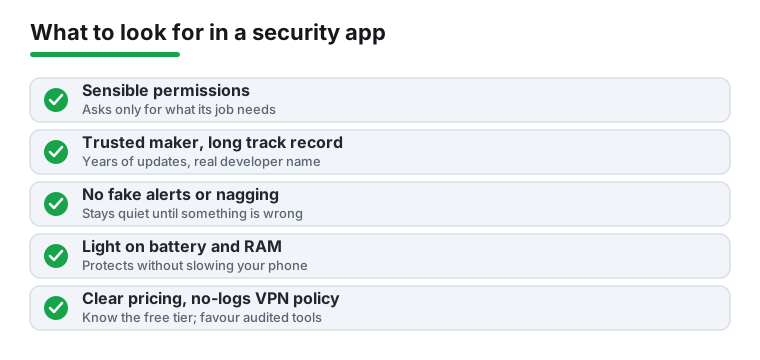
- Permissions that make sense. A flashlight-style app asking for your contacts is a red flag. A good security app requests only what its job needs, and explains why.
- A real track record. Favour apps from established makers with years of updates and millions of installs over a brand-new app with a generic name. Check the developer, not just the star rating.
- No nagging or fake alerts. Avoid apps that constantly warn you are at risk to push an upgrade. Honest tools stay quiet until something is actually wrong.
- Light on battery and RAM. A scanner that drains your battery or slows your phone is doing more harm than the threats it claims to stop. Watch the background usage in your battery settings for a day.
- VPN logging, servers and speed. For a VPN, look for an independently audited no-logs stance, RAM-only servers, a privacy-friendly home country, and servers close enough to keep streaming and calls smooth.
- Open-source or audited where it counts. For password managers and VPNs especially, open code or a published security audit is worth more than marketing claims.
- Clear pricing. Know what the free tier really includes and what the subscription unlocks before you commit. Watch for auto-renewing trials.
Privacy, cost and what 'free' really means
Security apps are one of the easier places to overspend, so it pays to know where free is genuinely fine and where it hides a cost. A free VPN is the clearest trap: running servers costs money, and a service charging you nothing often makes it back by logging or selling the very browsing you wanted to protect. A small free tier from a paid provider is fine as a sample; an unfunded free VPN is not. Free antivirus tiers usually give you basic on-demand scanning and hold back the extras like anti-theft or web filtering, which is reasonable, but read what the paid plan actually unlocks before you upgrade. Keep an eye on trials too, since the auto-renew often charges a full year the moment the free week ends.
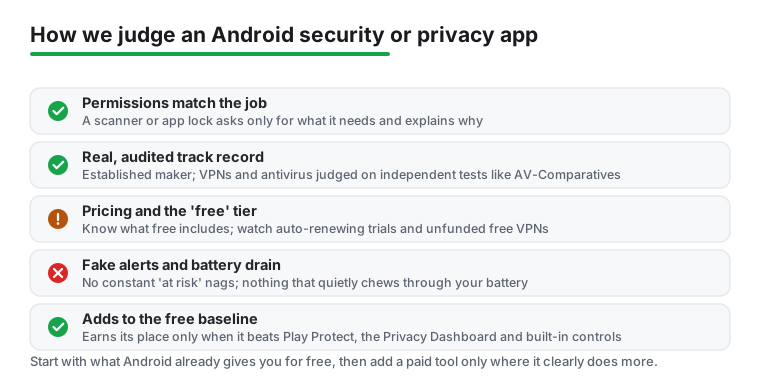
The reassuring part is that the strongest baseline protections are already free and built in. Play Protect's live, on-device threat detection, the updated Privacy Dashboard with its seven-day history, and Android 17's parental controls all cost nothing and run on the phone itself. Spend money only where a paid tool clearly does something Android does not.
Common mistakes to avoid
- Installing several antivirus apps at once. They fight each other and slow everything down. One is plenty.
- Trusting a free VPN with no clear funding. If you are not paying, your browsing data often is the product.
- Granting Accessibility or Device Admin access without reading why. These are powerful permissions that malware loves to request.
- Relying on an app lock alone for sensitive data. Pair it with a strong screen lock and, where offered, real encryption.
- Ignoring the built-in tools. Google Play Protect now scans app behaviour in real time, and the Privacy Dashboard lets you see a seven-day history of which apps touched your location, camera or microphone and revoke access on the spot. Both cover a lot before you add anything.
How we pick
Every app here is one we installed and lived with on real Android phones, checking permissions, background drain, alerts, and how easy it was to set up. We weigh each one against the free protection Android already gives you, and only recommend a third-party tool when it plainly beats the built-in baseline. We take no payment for placement, and an app earns its spot only by being genuinely useful and trustworthy.