Best Parental Controls Apps for Android (2026)
Setting up parental controls on Android used to mean fighting with clunky menus and apps that drained the battery within an hour. The good news is that in 2026 the better tools are genuinely pleasant to live with, and a few of them barely touch your kid's phone performance at all. We installed and ran each of these apps on real family devices, from a hand-me-down phone for a six year old to a teenager's daily driver, to see which ones actually hold up. Below are the ones we keep coming back to.
1. Google Family Link
This is where almost every parent should start, mostly because it is free and built right into Android. In our testing the setup took about ten minutes per child, and the daily screen time limits and app approval requests just worked. You can lock the device remotely, see activity, and set a bedtime. The content filter is basic, but for younger kids it covers the essentials beautifully.
2. Qustodio
Qustodio became our go to when we needed proper web filtering across browsers and YouTube. The dashboard is clean, and we liked the weekly activity reports that landed in our inbox, which made conversations with our tester's teen far easier. Location tracking and per app time limits worked reliably in testing. The free tier is limited, so plan on the subscription, but it earns its keep on a busy device.
3. Bark
Bark takes a different angle that we came to appreciate. Instead of blocking everything, it quietly monitors texts, email, and social apps for signs of bullying, self harm, or predators, then alerts you only when something needs attention. During our test it flagged a couple of borderline messages without us reading every chat, which felt like the right balance of trust and safety for an older child.
4. Norton Family
If you already use Norton on the family computers, this one slots in neatly. We found the web supervision strong and the school time mode useful for keeping a kid focused during remote lessons. It logs search terms and visited sites in plain language, so you are not decoding cryptic reports. The app sometimes nags for permissions after updates, but once settled it runs quietly and rarely needed our attention.
5. MMGuardian
MMGuardian is a full Android parental control system with both a parent app and a child app on Google Play, so it installs and runs natively on the kid's phone. It covers screen time limits, app blocking, web filtering, and GPS location, and it monitors texts and chat in apps such as WhatsApp, Snapchat, Instagram, TikTok, and Discord. It also sends safety alerts when messages or searches suggest bullying, sexting, or self harm. There is a free trial, and after that it runs on a monthly or yearly subscription with single child and family plans.
6. Kaspersky Safe Kids
This one surprised us with how much it offers at a low price. The free version covers app management and basic web filtering, and the paid upgrade adds location alerts and screen time scheduling for less than most rivals charge. In our trial the GPS reporting was accurate and the battery hit was minimal. The interface is functional rather than beautiful, but for value, Safe Kids is hard to beat. One thing to know in the US: following the government ban on Kaspersky sales, the app is no longer on the US Google Play Store, so you have to get it from another store such as the Samsung Galaxy Store or Huawei AppGallery, or as an APK from Kaspersky's site.
7. mSpy
mSpy sits at the heavier monitoring end, and it is best suited to parents of older teens who have agreed to being tracked. It logs messages, call history, and location in detail, with a dashboard you check from your own phone. The install is more involved than the others, and you should be open with your child about it. Used transparently, it shows far more than lighter apps do.
8. FamiSafe
Made by Wondershare, FamiSafe packs a lot into one app, and we liked how everything lived under a single tidy dashboard. Screen time, location history, a driving report for teen drivers, and an explicit content detector are all included. During testing the suspicious photo alert correctly flagged a few images, giving us peace of mind on a shared tablet. The breadth means you are unlikely to need a second app.
9. OurPact
OurPact is the app we recommend to parents whose main battle is simply screen time. The one tap block button that instantly pauses internet and apps at dinner became a household favourite during our test, and the scheduling let us automate school nights without nagging. App blocking and location round it out. The free plan is restricted, but as a focused time management tool it is excellent.
10. Canopy
Canopy impressed us with its real time image filtering, which blurs explicit content before it ever loads rather than relying on a blocklist. For younger kids browsing freely, that proactive approach felt reassuring during our trial. It also includes sexting prevention and removal protection, so the app is tough for a clever child to uninstall. It is newer and more focused, but what it does, it does very well.
How to choose a parental control app for Android
The right app depends far more on your child's age and the problem you are actually trying to solve than on a long feature list. A controller built for a six year old's first tablet looks very different from something you would put on a fifteen year old's daily phone. Before you install anything, it helps to be honest about which of the questions below matter most to your family.
Start with what you actually need
- Age of the child. A young child needs simple time limits and a safe content filter. A teenager usually needs lighter touch, age appropriate oversight rather than hard blocks on everything.
- Block or watch. Decide whether you want to prevent access (time limits, web filtering, pausing apps) or quietly watch for trouble (alerts about bullying, self harm, or risky messages). Most apps are stronger at one of these than both.
- Content filtering quality. Real time page and image analysis lets a child research a sensitive homework topic without being blocked outright, which crude blocklists cannot do.
- Battery and performance. Well built apps barely register on battery, while heavier message and location loggers cost a few percent a day. On an older hand-me-down phone this matters.
- Tamper resistance. If a clever child will try to remove the app, look for device administrator protection so it cannot be uninstalled without your PIN. No protection is perfect, but it raises the bar.
- Cost. Start with a free tier to see whether an app suits your family, and only pay once you know you need advanced filtering, detailed location history, or social monitoring.
It also helps to think about how the app will fit into daily life. A tool that needs constant tending will get switched off within a month, while one that quietly handles bedtime and app limits in the background tends to stick. Set it up once, agree the rules with your child, and let it do its job rather than checking a dashboard every evening.
Try the free built-in tools first
Before paying for anything, look at what Android already gives you. Google Family Link is free and built into Android, and it covers the basics well: screen time limits, per app limits, content approval for new app installs, a daily bedtime, and location for the child's device. For many younger children that is genuinely all you need. Android's own Digital Wellbeing helps too, with app timers, a focus mode, and a bedtime schedule that the whole family can use, including parents who want to model good habits.
Third party apps earn their place when you need more than the basics. Tools such as Qustodio, Bark, and Norton Family add web filtering across browsers, social and message monitoring, and alerts that surface only the moments that need your attention. Where Family Link mostly blocks and limits, these apps lean toward watching for genuine warning signs, which suits an older child you do not want to lock down completely. If Family Link covers your situation, there is no need to layer extra software on top. Add a paid app only when there is a specific gap it fills.
An honest look at safety and privacy
Parental controls can genuinely help keep a child safer online, but they are not free of trade offs, and it is worth going in with clear eyes. The goal is protection that fits the child, not the most surveillance you can install.
Match the monitoring to the age
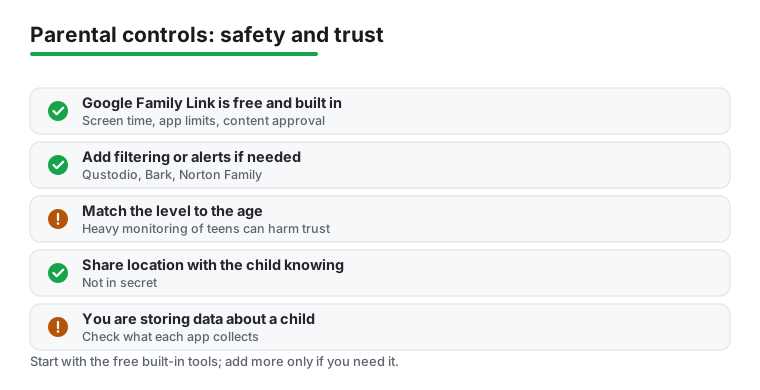
Close oversight makes sense for a young child who is still learning what is safe. The calculation changes as kids get older. Heavy monitoring of older children and teens can harm trust, and a teenager who feels watched often just moves the activity somewhere you cannot see. Monitoring should be age appropriate, and ideally something you have talked about together rather than installed in secret. A short, honest conversation about why a tool is there, and what it does and does not see, tends to work better over time than relying on locks alone. Many families also taper the controls back as a teen shows they can handle more freedom.
Be careful with location sharing
Knowing where a younger child is can be reassuring, and location features are one of the most useful parts of these apps. Use them with the child's knowledge rather than as covert tracking. When a child understands that location is shared, it stays a safety tool you both rely on instead of something that feels like spying, which is also healthier for the relationship as they grow. It is also worth framing location as something that works both ways for a family, so that checking in feels normal rather than one sided. As children get older, many parents move from continuous tracking to a simple check in when it is genuinely needed, which keeps the feature useful without it feeling oppressive.
Remember you are storing sensitive data about a child
This part is easy to overlook. Every one of these apps collects information about a child, and the heavier monitoring tools collect a lot: messages, browsing history, search terms, photos, and precise location. That data has to live somewhere, usually on the company's servers. Before you commit, check what each app actually collects, how long it keeps the data, and whether it shares anything with third parties. Read the privacy policy, prefer apps that are clear about their data practices, and turn off any monitoring you do not really use. The most powerful app is not automatically the right one. Often the lighter tool that collects less is the better fit, because the safest data is the data that was never gathered in the first place.
A simple way to decide
- Begin with Google Family Link and Digital Wellbeing, and live with them for a week or two.
- Note any real gap, such as web filtering or social monitoring, that the free tools do not close.
- Pick one third party app that fills that specific gap, rather than stacking several.
- Check its privacy practices, talk it through with your child if they are old enough, and turn on only the features you will use.
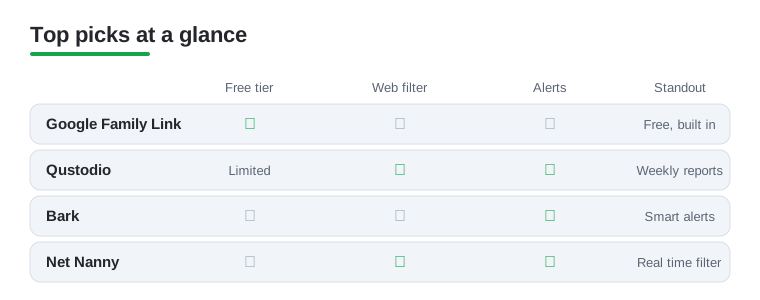
A practical rule of thumb: choose one app that matches your primary goal, keep the conversation open, and revisit the setup as your child grows. The comparison below shows how four of our top picks differ on the criteria most families weigh.
Frequently asked questions
Are free parental control apps good enough?
For many families, yes. Google Family Link is free, built into Android, and handles screen time, app approvals, and remote locking really well, especially for younger children. The free tiers of Kaspersky Safe Kids and Qustodio also cover the basics. You generally only need a paid app once you want advanced web filtering, detailed location history, or social media monitoring for an older teen.
Can my child just delete the parental control app?
Good apps make this difficult. Most of the ones we recommend set themselves as a device administrator, which blocks normal uninstalls and requires your PIN to remove. Canopy and MMGuardian in particular have strong tamper protection. That said, no app is completely foolproof, so pairing the software with an honest conversation about why it is there tends to work better than relying on locks alone.
Will a parental control app slow down or drain the phone?
In our testing the impact was small with the well built apps. Google Family Link, Kaspersky Safe Kids, and Qustodio barely registered on battery life. Heavier monitoring tools that constantly log messages and location can use a little more power, but you are usually talking about a few percent a day rather than anything dramatic. Keeping the app updated also helps it run efficiently.
Do these apps work alongside other security software?
They generally play nicely together. A parental control app focuses on your child's activity, while a separate antivirus protects the device from malware, so running both is sensible. If you want broader protection, it is worth browsing our roundup of the best antivirus apps for Android and our best VPN apps for Android guide alongside whichever family app you pick from the wider Security and Privacy category.
Should I tell my child the parental control app is there?
In most cases, yes, and it usually works better than secrecy. For younger children, explaining that the phone has limits and a safe filter is just part of teaching them to use it. For older kids and teens, monitoring that is hidden can badly damage trust if it is discovered, while an open conversation about what the app does, and why, keeps it a shared safety measure. Covert tracking is best reserved for genuine safety concerns rather than everyday use.
Is my child's data safe with these apps?
It depends on the app, so it is worth checking before you commit. These tools collect sensitive information about a child, and the heavier monitors gather messages, browsing, photos, and location that is stored on the company's servers. Read the privacy policy to see what is collected, how long it is kept, and whether anything is shared with third parties. Prefer apps that are clear about their data practices, turn off features you do not use, and remember that the lighter tool which collects less is often the safer choice.