Best Antivirus Apps for Android (2026)
Android does a lot to keep you safe on its own, but a good antivirus app still earns its place if you sideload apps, tap a lot of links, or just want a second set of eyes. We installed and lived with every app below on our own phones for a few weeks each, watching how they scan, how much battery they sip, and how often they nag. Here are the ones we would actually keep installed, with honest notes on what you get for free and what costs money.
1. Bitdefender Mobile Security
This is the one we recommend to most people. Scans are quick, detection sits near the top in independent lab tests, and in our testing it barely touched battery life. The interface is calm and uncluttered, which matters for a security app. The free version handles on demand scanning, while the paid tier (around 15 dollars a year) adds always on Scam Alert and web protection.
2. Norton 360
Norton throws a lot into one app: malware scanning, Wi-Fi checks, a built in VPN, and Dark Web Monitoring that pings you if your email shows up in a breach. It suits people who want one subscription instead of juggling separate tools. It is paid only and not cheap, but the bundle is useful. We liked that the Wi-Fi scan flagged a sketchy coffee shop network before we connected.
3. Malwarebytes
Malwarebytes is the app we reach for when something already feels wrong, a weird popup or an app we do not remember installing. It is brilliant at catching adware and shady apps that slip past lighter scanners. The free version does manual scans, which covers most folks. Premium (about 12 dollars a year) adds real time protection and safe browsing that blocks scam sites before they load.
4. Avast Mobile Security
Avast has been a household name for years, and the Android app stays friendly for newcomers. It scans apps and files, checks Wi-Fi networks, and includes a handy app lock and photo vault. The free tier is generous, though it shows ads and the occasional upsell. Want it ad free with a VPN baked in? The premium plan clears the clutter. A solid, approachable first antivirus.
5. AVG AntiVirus
AVG shares an engine with Avast but leans even more beginner friendly, which is why it stays popular with people setting up their first phone. Scanning is one tap, and the app explains threats in plain language instead of jargon. The free version covers virus scanning, app insights, and a basic photo vault. If you are just getting started, our step by step AVG setup guide walks you through it.
6. Kaspersky Premium
Kaspersky still posts some of the strongest detection scores in the business, and on Android it pairs that with smooth call filtering and anti phishing for your texts and browser. The interface is tidy and scans are fast. Note that the U.S. government has restricted Kaspersky, so weigh that for your situation. Otherwise the free tier is capable, and paid plans add real time protection and identity tools.
7. ESET Mobile Security
ESET is a quiet overachiever. It is light on resources, rarely interrupts you, and posts excellent lab results year after year, a great fit for older or budget phones short on memory. The free tier handles scanning, while the paid version (roughly 15 dollars a year) adds anti theft, app lock, and payment protection. In our testing it was the app we forgot was running, in the best way.
8. McAfee Mobile Security
McAfee suits the person who wants guardrails everywhere. It bundles malware scanning with a VPN, identity monitoring, and a useful Wi-Fi scan that warns you off risky hotspots. The free version covers the basics, and paid plans pile on privacy extras. It can feel busy and eager to upsell, but the core protection is dependable and the breach alerts landed promptly during our weeks with it.
9. Trend Micro Mobile Security
Trend Micro shines at the things that actually bite most people: phishing links, scam texts, and dodgy websites. Its message filtering caught fake delivery texts that other apps waved through during our tests. It also includes a parental controls mode and a privacy scanner for social accounts. It is largely paid, with a trial to start, and a smart pick for families or heavy link clickers.
10. Sophos Intercept X for Mobile
Here is the pleasant surprise: Sophos is completely free with no ads, yet it punches with the paid crowd. You get malware scanning, web filtering, an authenticator, and a slick app lock. It suits privacy minded people who hate handing over a card for basic protection. The design is plain rather than flashy, but everything works. We kept it on a spare phone for months without one annoying prompt.
11. Avira Antivirus Security
Avira packs a lot into a free app: virus scanning, a daily data limited VPN, an identity safeguard that checks for leaked credentials, and a camera privacy monitor. It suits people who want a privacy toolkit, not just a scanner. The free tier is unusually full featured, and Avira Prime unlocks the unlimited VPN. The interface is clean, though the dashboard surfaces a lot at once.
12. Google Play Protect
Worth a mention because it is already on your phone, scanning every app you install at no cost. For people who only download from the Play Store, it is genuinely enough. It runs silently and updates itself, so there is nothing to manage. Where it falls short is sideloaded files and phishing links, the exact gap a dedicated app above fills. Pair it with one for proper peace of mind.
How to choose an antivirus app for Android
Before you compare feature lists, get clear on what you actually want the app to do. An antivirus app on Android is mostly a scanner with a few extras bolted on, so the real question is which extras matter to you and which are noise. It helps to remember that Android is not Windows. The platform sandboxes apps, restricts what each one can touch, and runs a built in scanner of its own, so an antivirus app here is a supplement rather than the only thing standing between you and disaster. Here is how we would think it through, in order.
Start with the lab results, not the marketing
The single most useful signal is whether independent labs test the app and how it scores. Two names do this work in the open: AV-Comparatives and AV-Test. If a vendor is regularly tested by them and posts strong, consistent results, that is a far better guide than any claim on the store page. If an app is never mentioned by either lab, treat its detection claims with caution.
Two details are worth keeping in mind when you read those results. The first is that the top apps tend to cluster very close together at the high end, so the difference between first place and fifth place is often small in practice. The second is that you want to see consistency across several rounds of testing rather than a single strong showing. A vendor that scores well year after year has earned more trust than one that appeared once and then vanished from the reports.
Match the features to how you use your phone
Most of the apps on this page detect malware competently, so the deciding factor is usually the surrounding tools. Think about which of these you will genuinely use:
- Web and link protection if you tap a lot of links in texts, email, and chat apps.
- Anti theft (remote lock, locate, wipe) if you misplace your phone often or travel.
- App lock if you share the device or hand it to children.
- A VPN if you spend time on public Wi-Fi, though a standalone VPN is often better than a bundled one.
If you would not use a feature, do not pay for it. A smaller app you actually understand beats a crowded suite whose dashboard you ignore.
Check the cost in battery and attention, not just money
Most reputable antivirus apps are light when idle. A full scan uses more battery and CPU, but only briefly while it runs. The bigger tax is often your attention: some apps lean hard on notifications, upsells, and ads. We weighed that as heavily as detection, because a security app you mute or uninstall protects nothing. As a rule, avoid any "antivirus" or "cleaner" app that over asks for permissions or is heavy with ads. Those traits correlate with apps that are more interested in your data than your safety.
The honest part: do you even need one?
This is the section most roundups skip, so we will be plain about it. For a lot of people, the answer is that you may not need a dedicated antivirus app at all.
Android already ships with Play Protect
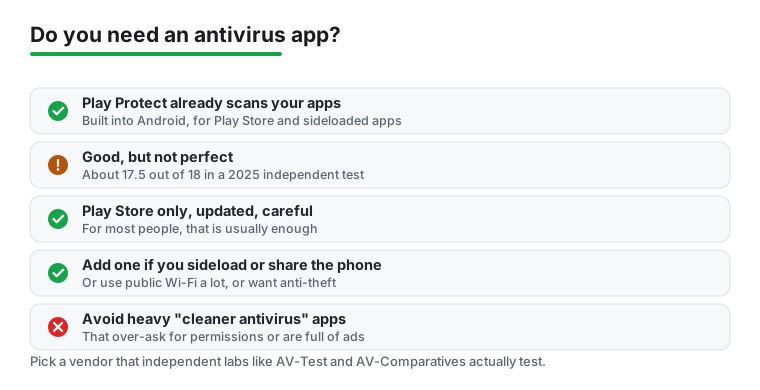
Every modern Android phone includes Google Play Protect. It scans apps from the Play Store, and it also scans apps you install from elsewhere. It runs in the background, updates itself, and costs nothing. It is not a token gesture either: in an independent AV-Test in mid 2025 it scored about 17.5 out of 18, only slightly below the top dedicated apps. That gap is real but small.
When good habits are enough
If you install only from the Play Store, keep Android and your apps updated, and avoid sketchy links and downloads, then Play Protect plus those habits is usually enough. There is no shame in that being your whole setup. The phone is already doing the heavy lifting, and piling on a second scanner adds little for the typical user.
It is worth being honest about where the real risk sits for most people. The threats that actually catch ordinary users are rarely classic viruses. They are phishing messages that imitate a bank or a delivery service, fake login pages, and apps that beg for permissions they have no reason to need. Good habits address those directly, and no scanner replaces a moment of caution before you tap a link or grant access to your contacts. If your instinct is already to slow down when something looks off, you are most of the way there.
When a dedicated app earns its place
A separate antivirus app adds the most value when your situation steps outside that simple pattern. Consider one if you:
- Sideload apps from outside the Play Store with any regularity.
- Use public Wi-Fi a lot, where phishing pages and rogue networks are more common.
- Share a device with family or hand it to kids.
- Want extra anti theft, phishing protection, or privacy tools in one place.
In those cases the right move is still to pick a vendor that the independent labs actually test, then turn on only the features you will use. If you want a second, vendor side view of the same question, Norton has written about it too; read it with the usual awareness that they sell one of these apps.
One more honest note on the running cost. Most reputable antivirus apps are light when they are sitting idle, so the day to day battery impact is small. A full scan does use more battery and CPU, but only for the short time it is actually running, and you can often schedule that for when the phone is charging overnight. The thing to steer clear of is the opposite kind of app: the so called antivirus or cleaner that runs constantly, fills the screen with ads, and asks for sweeping permissions. Those tend to cost you more in battery, attention, and privacy than the protection is worth, and they are the apps that give the whole category a bad name.
A short, practical takeaway
If you are a careful, Play Store only user, you can stop here: keep Play Protect on, keep your phone updated, and you are in good shape. If you sideload, live on public Wi-Fi, share your phone, or simply want anti theft and link protection in one tidy app, choose a lab tested vendor from the list above and enable just the features that fit your life. Either way, the goal is the same: real protection you will actually leave running, with no battery drain or nagging you will come to resent.
Compare our top picks at a glance
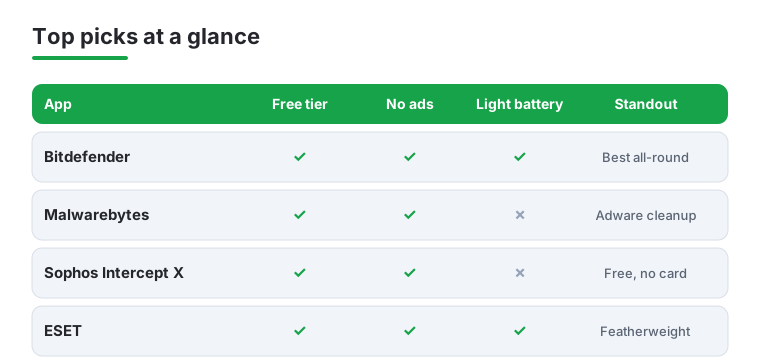
Not sure where to start? This quick comparison lines up four of our favourites on the things that matter most: a usable free tier, no ads, a light touch on battery, and the one thing each does best.
Frequently asked questions
Do I really need an antivirus app on Android?
If you only install from the Play Store, Google Play Protect covers the basics and you may be fine. But if you sideload apps, tap links in texts and emails, or share a phone with kids, a dedicated antivirus adds real protection against phishing and shady apps that Play Protect can miss. Think of it as a cheap insurance policy.
Are free antivirus apps good enough?
For many people, yes. Free versions of Bitdefender, Malwarebytes, and especially Sophos Intercept X handle scanning well. The catch is that free tiers often skip always on real time protection and web filtering, and some show ads. If you want hands off protection that blocks threats before they land, the paid upgrade is usually worth the small yearly fee.
Will an antivirus app drain my battery?
Less than you might fear. Modern apps like Bitdefender and ESET are built to scan in bursts and sit quietly the rest of the time, and in our testing the battery hit was barely noticeable on a normal day. Heavier suites with always on VPNs use a bit more, so if battery is precious, lean toward a lightweight scanner.
What else should I do to stay safe beyond antivirus?
Keep Android and your apps updated, stick to the Play Store when you can, and use a strong screen lock. For privacy on public Wi-Fi, add one of the best VPN apps for Android, and to keep nosy hands out of sensitive apps, try one of the best app lock apps. You can find more in our security and privacy app guides.
Is Google Play Protect enough on its own?
For a careful user it often is. Play Protect scans apps from the Play Store and apps installed from elsewhere, and in an independent AV-Test in mid 2025 it scored about 17.5 out of 18, only slightly below the top dedicated apps. If you stick to the Play Store, keep Android updated, and avoid sketchy links, Play Protect plus good habits is usually enough. Add a dedicated app mainly if you sideload, use public Wi-Fi heavily, or want extra anti theft and phishing tools.
How do I know if an antivirus app is trustworthy?
Look for two things. First, check whether independent labs such as AV-Test and AV-Comparatives actually test it and how it scores, since that matters far more than store page claims. Second, watch the permissions: be wary of any antivirus or cleaner app that asks for far more access than it needs or that is heavy with ads, as those are signs it may be more interested in your data than your safety.